


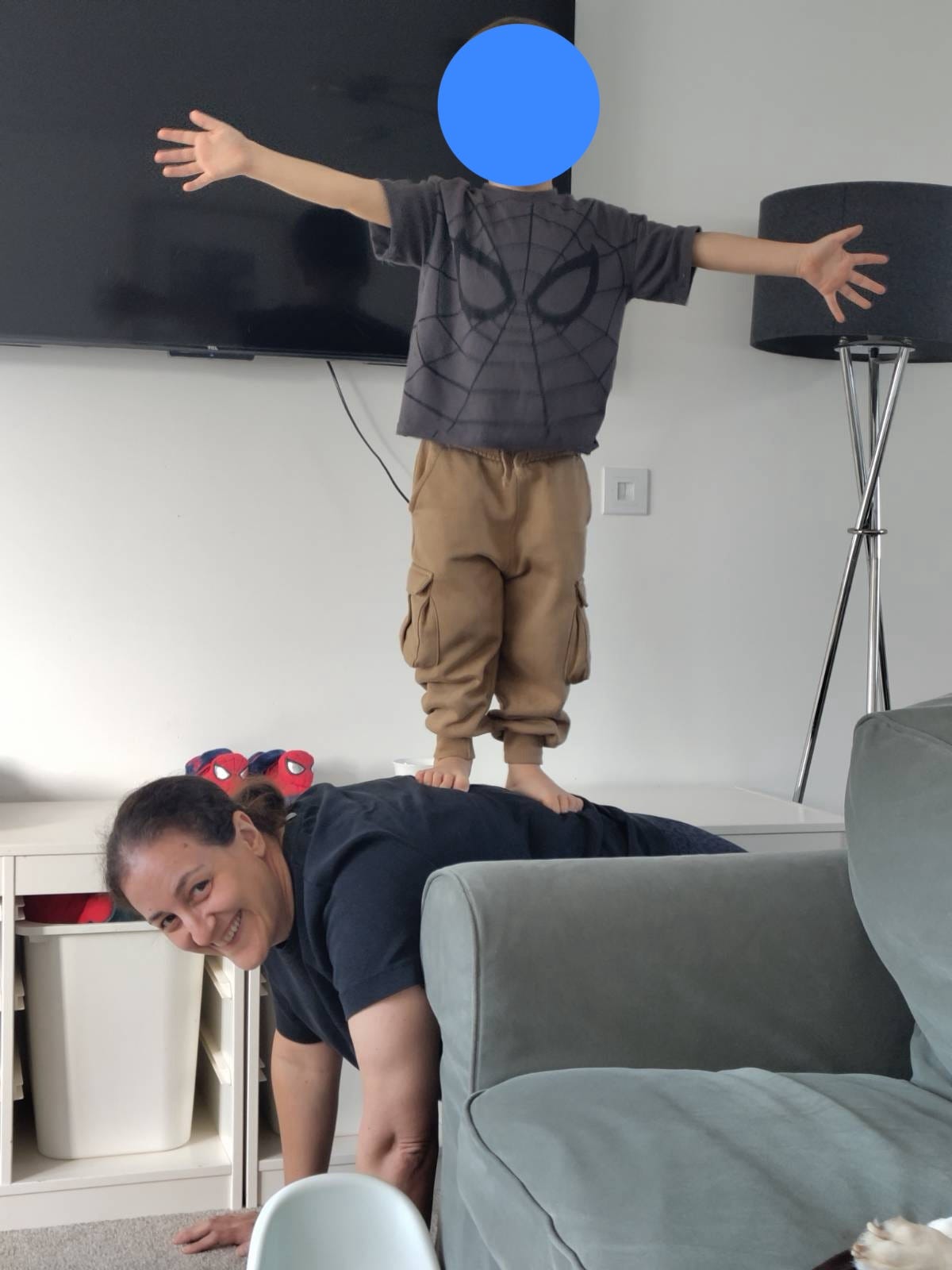
I spent last Sunday afternoon being a horse for my nephew, who turns 3 in November. I neighed and reared and clip-clopped around the living room on all fours, whilst he dug his heels into my side and farted on my back. I was impressed by his complete fearlessness as he stood up on me and leapt forwards onto the sofa with a huge ‘raaaaaaaaa!’.
In about 15 years’ time he will be entering the workforce — and I wonder what will the world look like then? What job will he go into?
When I think back to 15 years ago in my own career, I didn’t even know that product management was a thing, even though people will tell you it’s been around for more than 100 years at this point. In 2011 I had just moved into a role as an internal process improvement specialist at a housing association. I was learning systems thinking, and suddenly the way I saw the world made sense.
It was two years later that I took up my first role in product, although it wasn’t called that at the time, and my tech career blossomed from there. I had joined the industry after the dotcom bubble so missed the chaos surrounding that, and left full-time employment in 2023 after the pandemic crash to start my own business. This is to say, the AI boom we're all now going through is probably no different to other tech bubbles in how we should approach it. Something is clearly changing. Nobody yet knows into what. Speculation and hype are rife but actual facts are scarce.
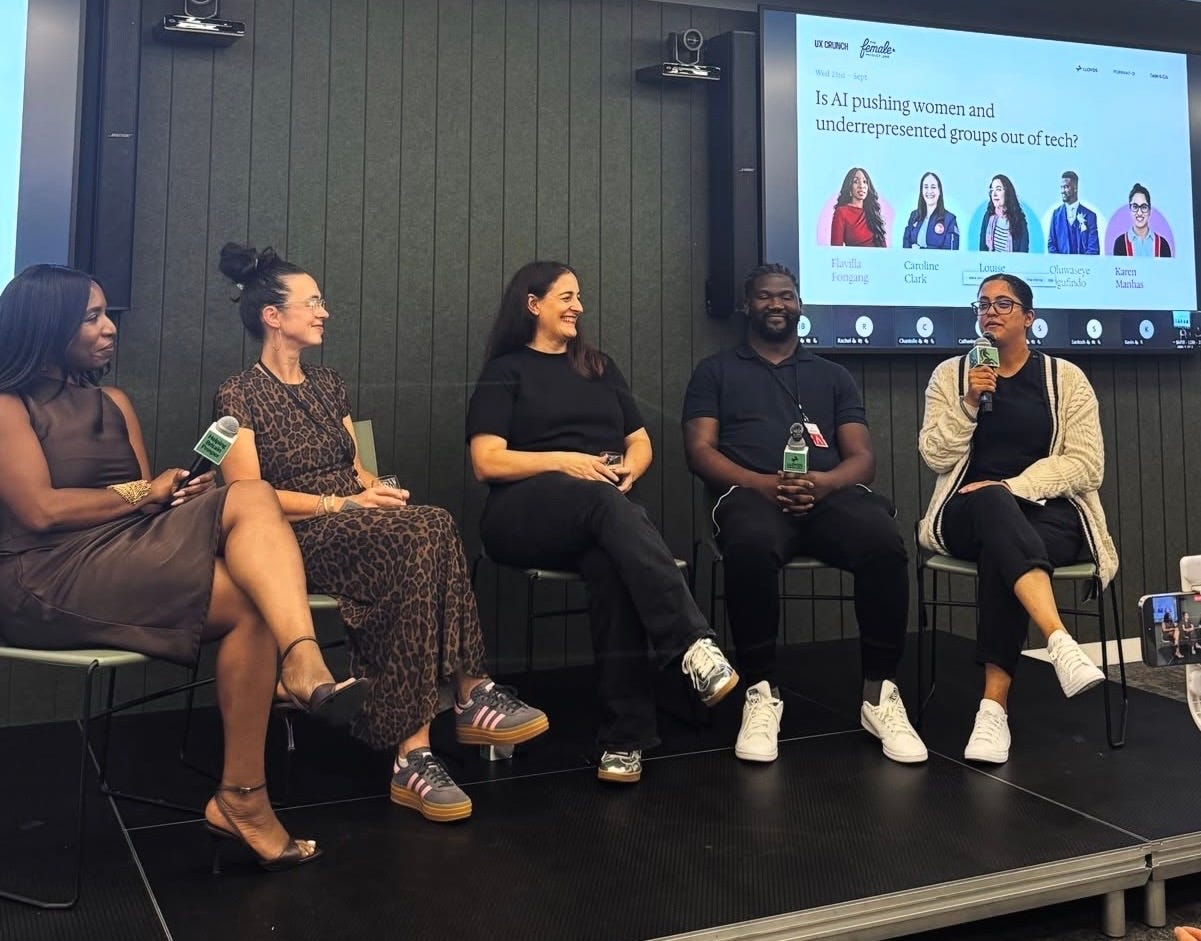
This week, two pieces of my work collided. On Wednesday I was at Lloyds Bank in Moorgate talking on a panel about how AI is pushing women and underrepresented people out of tech (thanks to Female Product Lead and UX Crunch for inviting me!). Beside that, I’ve been interviewing senior product leaders for a career development course I’m collaborating with Mind the Product (MTP) to produce.
The fundamental questions at the heart of both: how is AI impacting product roles? And how do we adapt to not just keep up, but get ahead?
I’ve been debating whether the course I’m creating is really about career development or career resilience? One thing is clear — whereas in the past companies would pay for us to go on training or bring experts in, those L&D budgets are being slashed so we cannot rely on our companies investing in us anymore. Certainly in other conversations I’ve had earlier this year there is some money available for AI skills training — but not much else.
Often when we think of resilience we assume its about the psychological: doing the mindset work, developing mental toughness. And that’s part of it, but also rather limited as it’s too narrow a definition. Resilience is more social, not individual, in its mechanism.
I define career resilience as the ability to bounce back when challenges arise in your career — stalled transformations, burnout, layoffs. On the last point — the panel agreed it’s not a case of ‘if’ you lose your job so much as ‘when’ now. Employment has become more precarious, as over the past ten years we’ve seen the rise of zero hours contracts, interim and fractional roles. And the truth bomb I dropped into the room is starting your own business isn’t the romantic alternative that social media makes out — Alex H Smith’s most recent article on the death of the lifestyle business was a rude but necessary wake up call. It’s always been hard, it’s getting even harder because of AI, and if you don’t like sales you will fucking hate running your own business.
Back to resilience. The American Psychological Association defines it as:
“The process and outcome of successfully adapting to difficult or challenging life experiences, especially through mental, emotional, and behavioural flexibility and adjustment to external and internal demands.”
The key words here are adapting and flexibility. This makes me think of Tao Te Ching’s proclamation to be like water: Water doesn't fight the shape it's poured into. Cup, bottle, riverbed, it becomes whatever holds it, and it still gets where it's going. It doesn't push for the top spot either, it's happy to flow to the low ground everyone else avoids. The lesson here is to be flexible to your environment, don’t force your way through things, and don’t feel you need to be on top so long as you’re moving forwards.
So how do you be like water in practice in your career? Here’s some practical suggestions:
Know the market
Set yourself a career goal every six months to make sure you have something on the horizon that you are focused on. It doesn’t have to be vertical progression either — horizontal progression like increases in scope and specialisms can be as much if not more fulfilling.
As part of setting that goal, do a sweep of live job ads: what knowledge, skills and experience are hiring managers recruiting for? Pick out the common themes, understand the trends, incorporate into your career goal.
Know what your current job and the next one is worth. Use salary benchmark tools like mine for product roles to find out what the market is willing to pay. You can work out what skills are in high demand and therefore bring you more earning power, to focus on developing those.
Build the muscle
Join communities where you can support each other, as resilience is built socially, not individually. Actually engage with conversations and go to events once a month, because passive participation is just kidding yourself.
Challenge yourself to get into rooms with people who are one or two steps ahead of you, this will raise your game without you doing much else than just being there and absorbing how they talk and work.
Don’t let your ego get in the way of your learning — ask the ‘stupid’ questions. I did this just the other day in a community full of senior product leaders, when I asked ‘what’s a forward deployed PM?’ Yes I could have googled it, but I wanted to hear direct from practitioners, not AI generated articles.
Block one hour every week for ‘tinker time’, which is non-structured exploration of a new skill, tool or framework. Don’t wait for your company to give you this time, do it anyway without permission.
Protect your head
Set aside your own L&D budget every month. Corporate L&D budgets have historically sat around 1-3% of payroll, with even generous companies rarely exceeding 5%, so set your own figure within this range to put aside from your salary. Put more aside if you want to stay ahead of the market. Spend it on books, courses, coaching, workshops, retreats without feeling guilty about investing in your future self.
Limit how much hype you consume. We all know the regular offenders in product. Absorbing hype does to your mind what fast food does to your body: feels good in the moment as you feel you’re ahead of everyone else, feels shit afterwards as your body processes lingering hormones like cortisol and adrenaline.
I don’t know what job my nephew will have in fifteen years. But neither does anyone else, including the people like frontier model CEOs who are selling us one version of our future, which I’m not buying.
What I do know is that my nephew stood on my back and took a leap without knowing if he could land it. He’s trying things out, pushing himself to his limits, and learning what works. He has no five year plan, no anxiety about whether it was the right move.
Somewhere between three and forty three we lose that courage, that willingness to move before we know the outcome. We start needing a guarantee that whatever action we take, it’s all going to work out fine.
Water doesn’t need the guarantee. It moves anyway, and finds its own way through.
So can you.