


We’ve all been there. Sat in a stuffy room with colleagues, watching an external facilitator talking through their slides whilst we dream of what sandwiches and fruit are going to be provided for lunch…
The company has announced a new transformation programme, and as a result, everybody needs to be trained in this new methodology (or operating model or framework).
Cue the workshop theatre.
If I sound cynical, it’s because I’ve been there myself. I’ve sat through sessions that take anywhere from an hour to three days. Some have been genuinely useful in getting me to think about a topic in a different way or form a new habit or way of doing things. But those are the exception. The majority have been frankly a waste of time.
And that’s no criticism of the facilitator or their material that they’ve taught me, because with many, it’s been obvious how much they care about their subject and want to share that with me, to help me.
Rather, it is a criticism of an over-reliance on a particular format that has limitations in how effective it is in making learning happen — particularly when it comes to belief change.
And as a workshop facilitator myself, I’ve learned this the hard way when sessions I’ve led have not landed as I expected them to.
When all you have is a hammer, every problem looks like a nail
Workshops have become the change vehicle of choice within organisations for several reasons:
You can standardise the content, which enables a consistent message to be deployed across the whole organisation.
As a delivery format, it scales to multiples of people, sometimes 50, 100 in the same room at one time.
It creates some sense of measurable progress — as in, before the workshop, people didn’t have certain knowledge, post-workshop they do.
It also has benefits socially: getting groups of people together in a room to discuss a single topic, especially if they don’t work together that often, helps with building trust and cohesion within and between teams.
As a result, it has become a default format for learning — from product squad retrospectives, to quarterly planning, to DEI legislation changes, to implementing AI into daily workflows. It’s adaptable, it can be quick to throw together (even with a few slides!), and even an inexperienced facilitator can get away with basic techniques on group engagement.
It is the hammer, and every learning opportunity is a nail.
The issue is: workshops are rigid, a snapshot in time of what is happening in the organisation. A fixed time, a fixed location, with fixed attendees. Who shows up can influence what issues are brought to the group discussions, and may not reflect what the real issues are, just which felt more pressing on that particular day.
The workshop is also a bubble: an artificial environment where anything is possible. What people learn inside the bubble has to survive contact with the real world — workplace culture, a difficult manager, a team with different ideas of what should be prioritised, and a set of structural incentives working against you. You show up, you learn, you leave — measurement rarely happens beyond the register of ‘did you attend?’
So why doesn’t the learning survive beyond the workshop?
Workshops change behaviour, not beliefs
A few months back I ran a workshop called Change, By Design, which was created as a belief-level intervention. From all my 1:1 coaching work I could see that many clients were being held back from achieving their goals because they were holding onto limiting beliefs about themselves — what they could and couldn’t do. And what I came to learn is that sustained behaviour change is only possible when we update the underlying beliefs that lead us to act in a certain way, otherwise we just revert back to what we’ve always done.
When I ran my workshop I was very ambitious: I wanted to take participants through all four steps of Belief OS™, my belief change model, in just 90 minutes. That is: map the current belief, challenge it with evidence, replace it with a more helpful belief, and then identify ways to sustain it. Of course, I was setting myself up to fail — but I didn’t realise that at the time. I knew something was off as I delivered the workshop; participants were feeding back they didn’t have enough time in the breakouts to really get going with discussion. And I received barely any feedback afterwards, which honestly felt deflating.
Until today. I was working on my business strategy with Claude and the conversation veered onto workshops. And I had an ‘aha’ moment: workshops don’t work for belief change, because it requires more sustained effort than a single intervention point.
This sounds obvious now I’m writing it! And yet I’m not alone — organisations keep designing transformation programmes as if a single workshop can do the whole job. We need to see change as a continuous process that we are fully absorbed in, like it or not.
Belief change is never ‘done’
I’m reminded of a thought exercise that my teacher from a Buddhist retreat I attended in India back in 2018 shared with me: when does a seed become a plant?
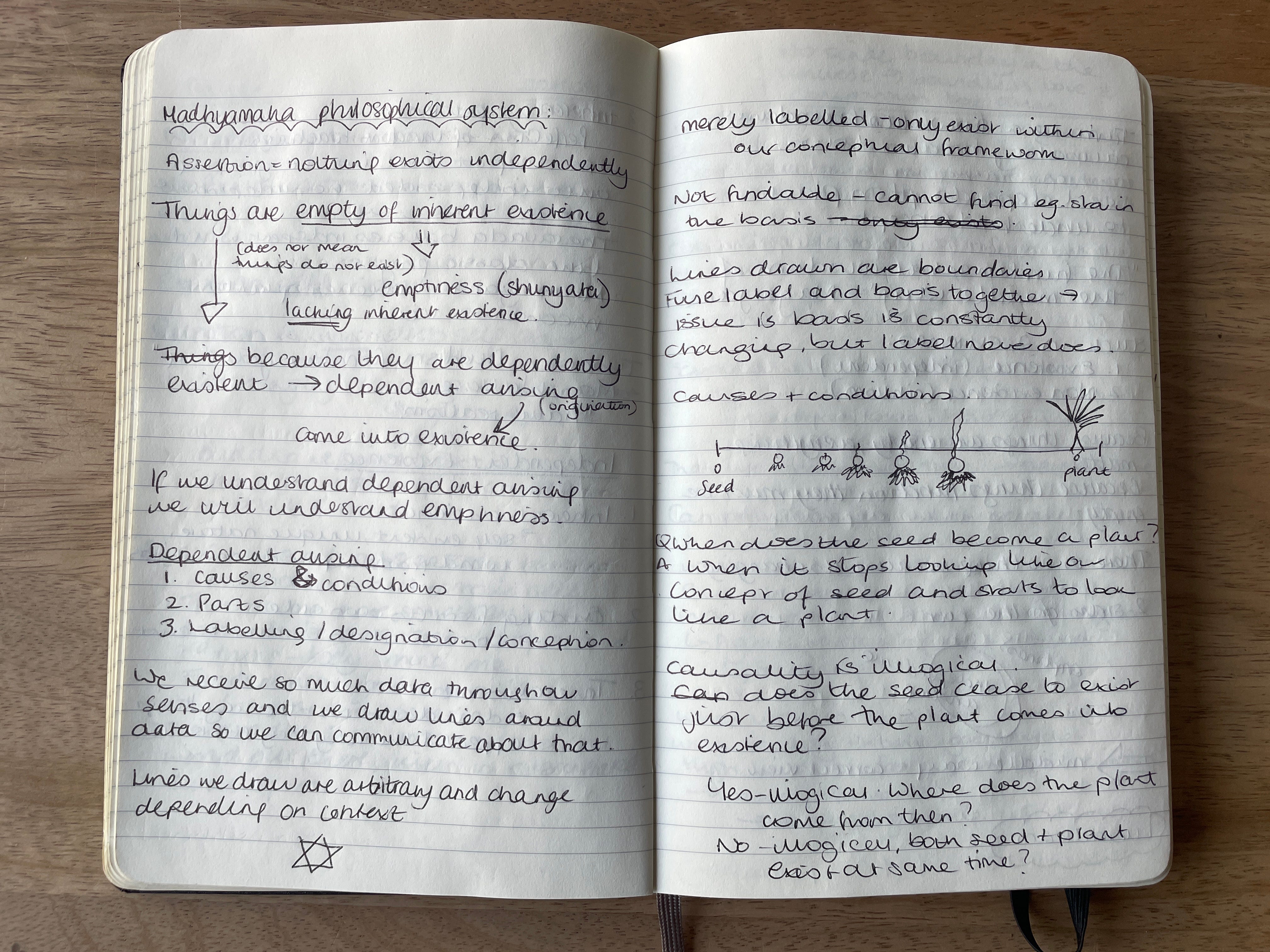
The change (in this case, growth) happens so gradually that it’s not until we actually look that we create a snapshot, and define it at that particular moment in time. It is a seed, not a plant. Now it is a plant, not a seed.
Let’s take AI as an example. Generative AI didn’t appear out of nowhere, it’s been decades in the making. When ChatGPT launched in November 2022, for the majority of people it signalled the start of LLMs — when actually OpenAI's API had been available since 2020, GPT-2 had caused alarm bells in 2019, and the transformer architecture underpinning all of it was published back in 2017. The seed had become the plant, but the seed had existed in various stages of development before that.
When we create these snapshots in time of how things are, we’re also defining what we believe about them. How did you feel about Generative AI in 2020? How did that change in 2022? How do you feel about it now? It may be the same, or it may have changed, depending on what messages and evidence you have been exposed to, and whether that confirms or contradicts your existing beliefs.
For leaders within organisations looking to increase AI adoption amongst their teams, they face the challenge of changing not only what people do with AI (behaviour) but also ensuring that the beliefs support that behaviour change in the long term. What do people on their teams believe about AI? That it’s a force for good in the world, or that the harm outweighs the benefits? That they will personally benefit from using it, or that they will be seen as less competent or lose their jobs to robots?
Back in 2018 I delivered a talk on AI at my company's internal conference, where I was generally optimistic about its potential and our collective future with it. My position now is more nuanced — shaped by years of watching promises outpace reality, and by my own direct experience of what the technology can and can't do. I’m the same person, but I now hold a different belief. And this belief change came about not because of a single moment of revelation (in a workshop), but because of accumulated experience over time.
Which leads me to my conclusion: workshops work best at the early stage of the change cycle — to raise awareness, give a new language and mental model to describe what is happening, and generate a motivation for change. But they fall short at ensuring that change is successful longer-term, because that requires sustained effort over time.
My one caveat to this: a carefully designed programme that blends workshops with other learning formats like individual and group coaching, accountability mechanisms, systemic incentives, and intentional practice in the real-world can create belief change. But in a world where organisations are looking at change through the lens of a quarterly OKR, instead of a multi-year commitment, the theatre will continue and we will continue to be stuck in our old ways of thinking and doing.
So what’s the alternative?
The answer isn’t a better workshop — it’s building the capability to lead belief change from within.
I work directly with leaders through 1:1 coaching — we can go deep on your beliefs, understanding where those diverge from your organisation’s, and on building the capability to lead change from the inside. When you understand how beliefs operate, you can create the conditions for something more durable than a post-workshop buzz.
The goal isn’t dependency on me: it’s that eventually you don’t need me. If you're a leader who recognises this pattern in your organisation, Let’s talk.