


Tonight, at 11.24pm UK time (6.24pm EDT), four humans will blast off from Cape Canaveral in Florida, heading for the Moon. As I write this, I’m listening to NASA’s official YouTube channel with the live feed. The astronauts are in their cradles in the Orion capsule, carrying out the pre-countdown checks.
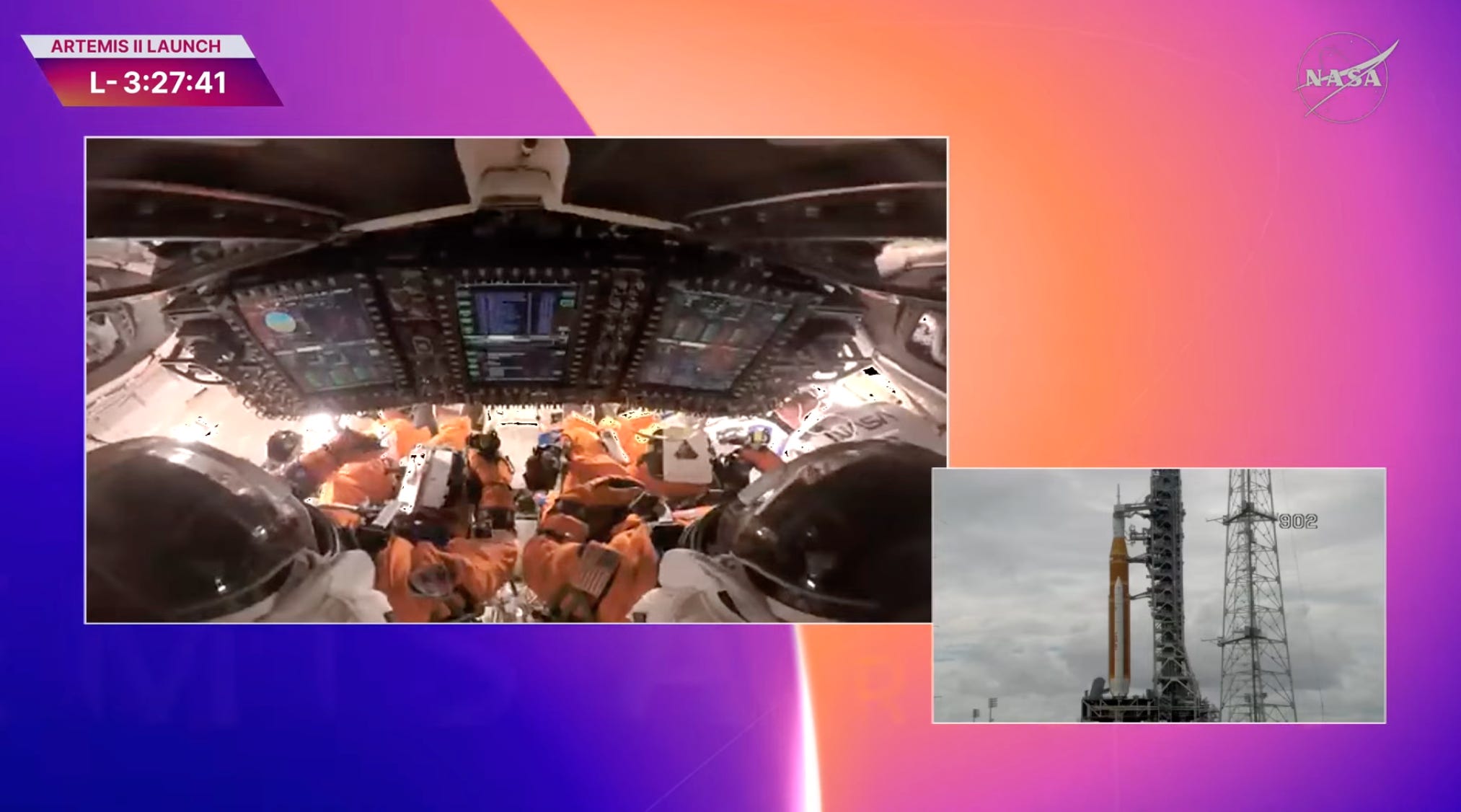
It’s the first time we’ve been back to the Moon since the 70s — I wasn’t even born when the Apollo missions wrapped up — and I’ve been feeling the excitement build inside me all day.
And what made this possible is decades of shared belief, amongst people and nations, that going back to the Moon was both possible and desirable. It’s taken thousands of people years of working together to make this happen.
In a world wracked with conflict, it’s a powerful reminder that humans are really at our best when we’re working together to make the impossible happen.
Purpose emerges from systems of belief
Earlier this week I interviewed Sarah for my forthcoming book, Beliefocracy. Towards the end of our conversation she shared her life’s purpose: “To make a difference to people's lives. Predominantly in mental health because that's where I've spent my whole career, working in mental health from the age of 18.”
It was the first time that purpose had come up in interviews, and I needed to reflect on how this fits with the model I’ve created in Belief OS™, because it touches on all four levers:
Meaning — purpose gives our lives shape and helps us interpret our life experiences
Affect — our purpose is based on value judgements about what is good and needed (which very much underpins the Japanese concept of ikigai).
Social — a purpose can unite people to work together
Context — having a purpose can influence what you do at work, or in life more generally
It didn’t neatly fit within the model as it currently stood!
So after some reflection I came to the conclusion that purpose actually sits above the model — as an emergent property of a collection of beliefs interacting together. An emergent property is a phenomena that arises from a system but cannot be found in any individual component. The whole exhibits behaviour that its parts don't have on their own. The example I always come back to is consciousness — we know it exists because we each experience it, but we cannot point to the specific part of the brain, neurones or neurotransmitters that it arises from.
When it comes to purpose, this emerges from a collection of beliefs acting together, to reinforce each other and align in the same direction (what Sarah calls her ‘North Star’). An example of a collection of beliefs supporting Sarah’s purpose could be:
I believe people deserve good mental health
I believe mental health support should be accessible
I believe in training therapists to be exceptional
When these beliefs align and reinforce each other, they create a direction of travel strong enough to guide Sarah through uncomfortable boardrooms and career-defining moments. One person's purpose emerging from their belief system. But what happens when thousands of belief systems align around a shared direction?
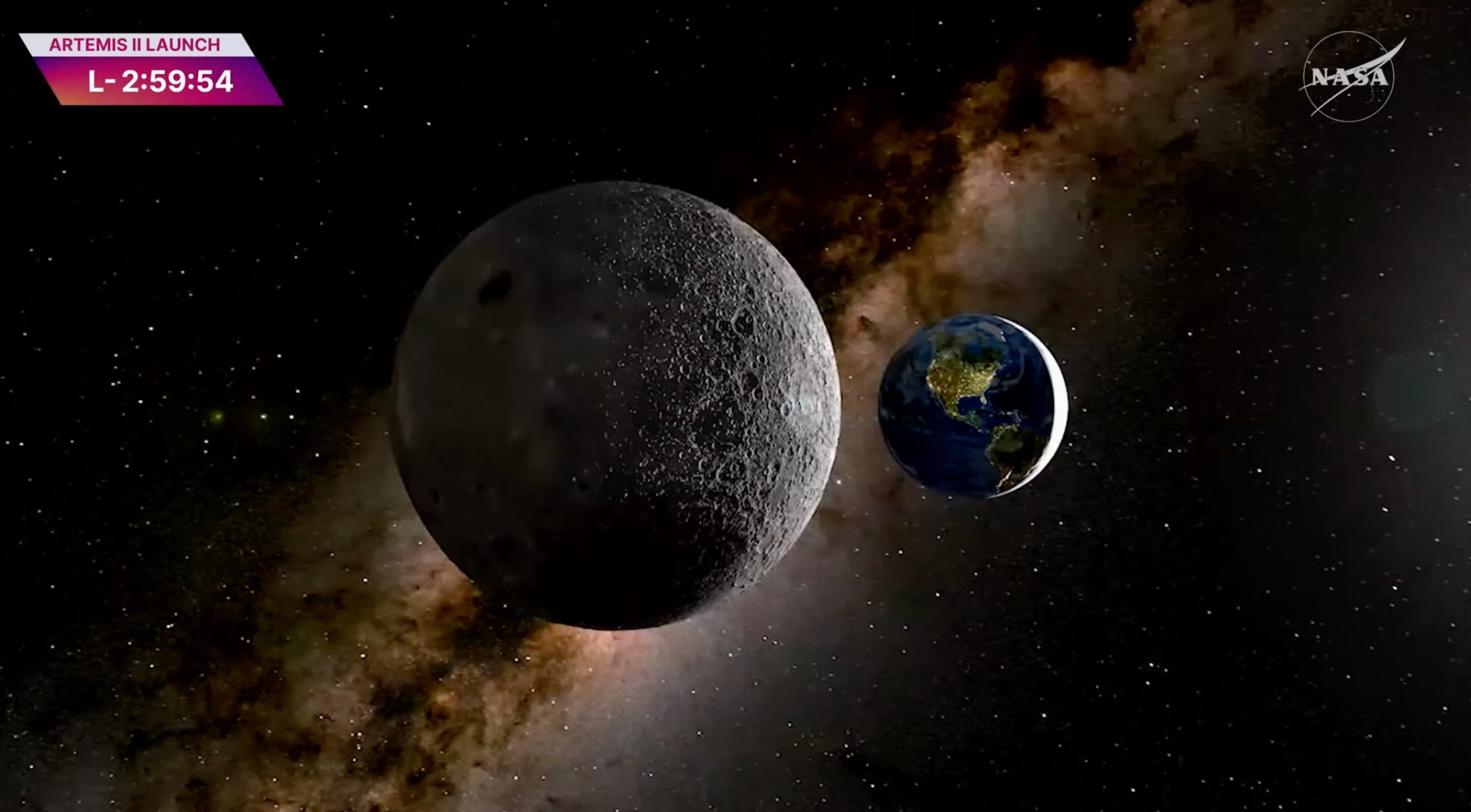
Why are we going back to the Moon?
I’ve been glued to BBC News throughout the day. And of course, alongside the buzz and anticipation have been the inevitable comments: why are we even bothering to go back?
First, let’s look at the economics. The Artemis programme has cost about $93 billion in total. If Apollo is anything to go by, that investment will pay back exponentially. In 1975, economists calculated Apollo’s ROI at 15-to-1 — and even that turned out to be an underestimate. One report described the actual return as ‘off the charts‘.
Second, the Moon contains important resources that many nations are interested in taking control of — so it’s a race to see who gets there first (which is somewhat reminiscent of the 1970s…). The Moon contains rare earth elements which are needed in technology production, and water is trapped in ice beneath its surface. The Artemis missions scheduled between now and 2028 are strategically designed stepping stones towards establishing a permanent lunar base.
And beyond the Moon is Mars. NASA has its sights set on the red planet, with missions planned for launch in the 2030s. It is a lot easier to launch deep space rockets from outside Earth’s atmosphere than it is from the surface. The Moon could provide essential launch capability.
But none of these truly answer the purpose, nor the collection of beliefs that underpin this drive to the Moon. And that is harder to answer, but interviews with experts in the space industry hint at it (all quotes taken from BBC articles).
Keith Wright, an engineer who worked on the original Apollo mission, says this: “We now need to learn to live properly off the planet because we need to spread our humanity away from the Earth. With the Earth we've got all our eggs in one basket, and if anything really disastrous happened we are in serious trouble.”
David Morris, whose team makes imaging equipment for the space agencies, said “If you look back to what happened in 1969 and the transformational aspects of seeing men on the Moon, I'd like to think that similar global excitement can happen when we see it happen again. It will invigorate the world to think more about being 'the world' rather than just lots of separate nations.”
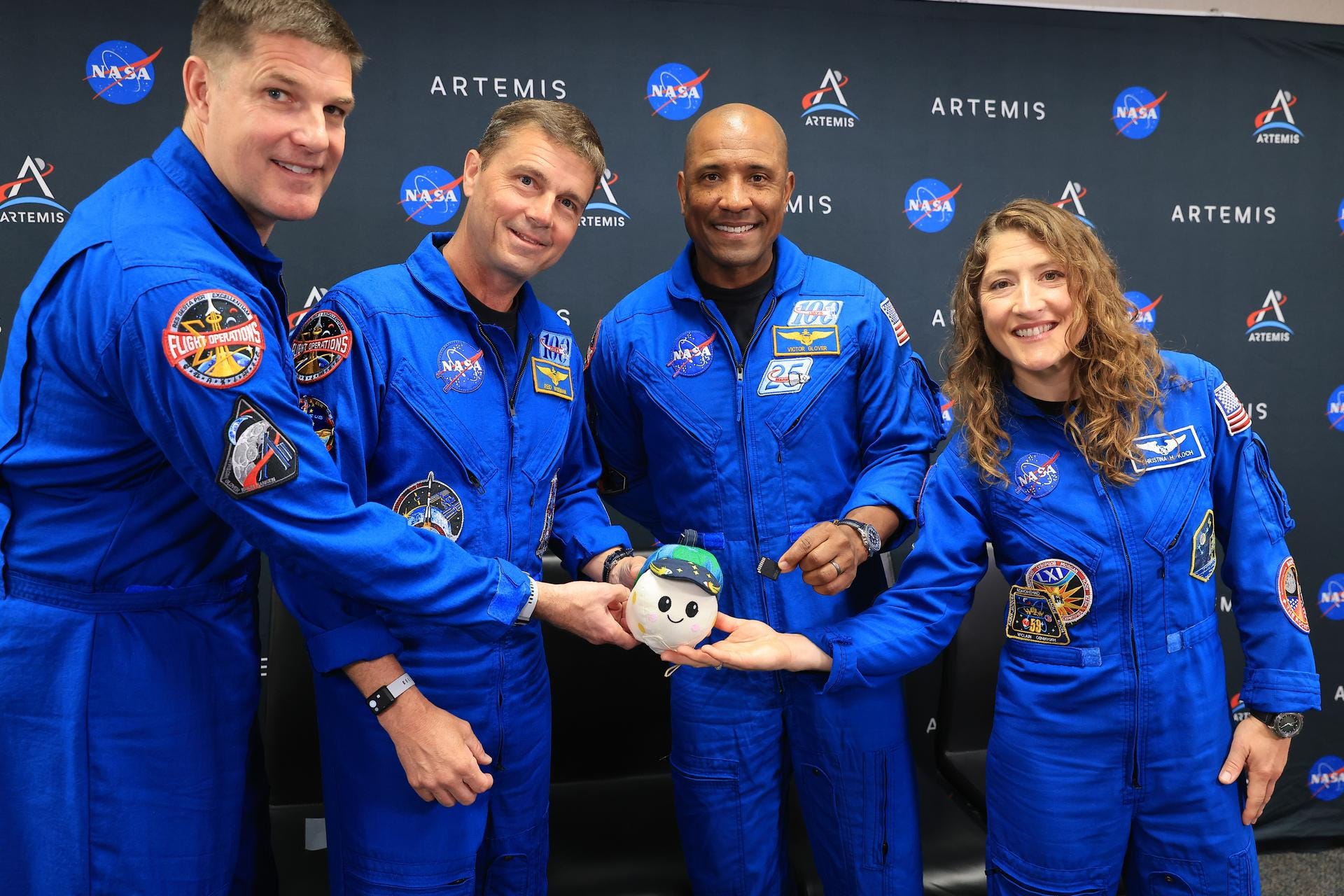
One of the Artemis II crew, Christina Koch, said this: “[The] discovery and knowledge that we bring back to Earth is the “entire point” of the operation.”
Together these beliefs — that humanity's future extends beyond Earth, that exploration unites us, that discovery matters for its own sake — don't exist in isolation. They overlap, reinforce each other, and align across thousands of people who have dedicated years to this mission. Together, they create an emergent collective purpose powerful enough to survive budget cuts, political changes, and decades of setbacks: humanity belongs beyond Earth, and building that future starts now.
Ad astra 🚀
When you’re ready, I work with women leaders in tech and space through executive coaching and speaking engagements.