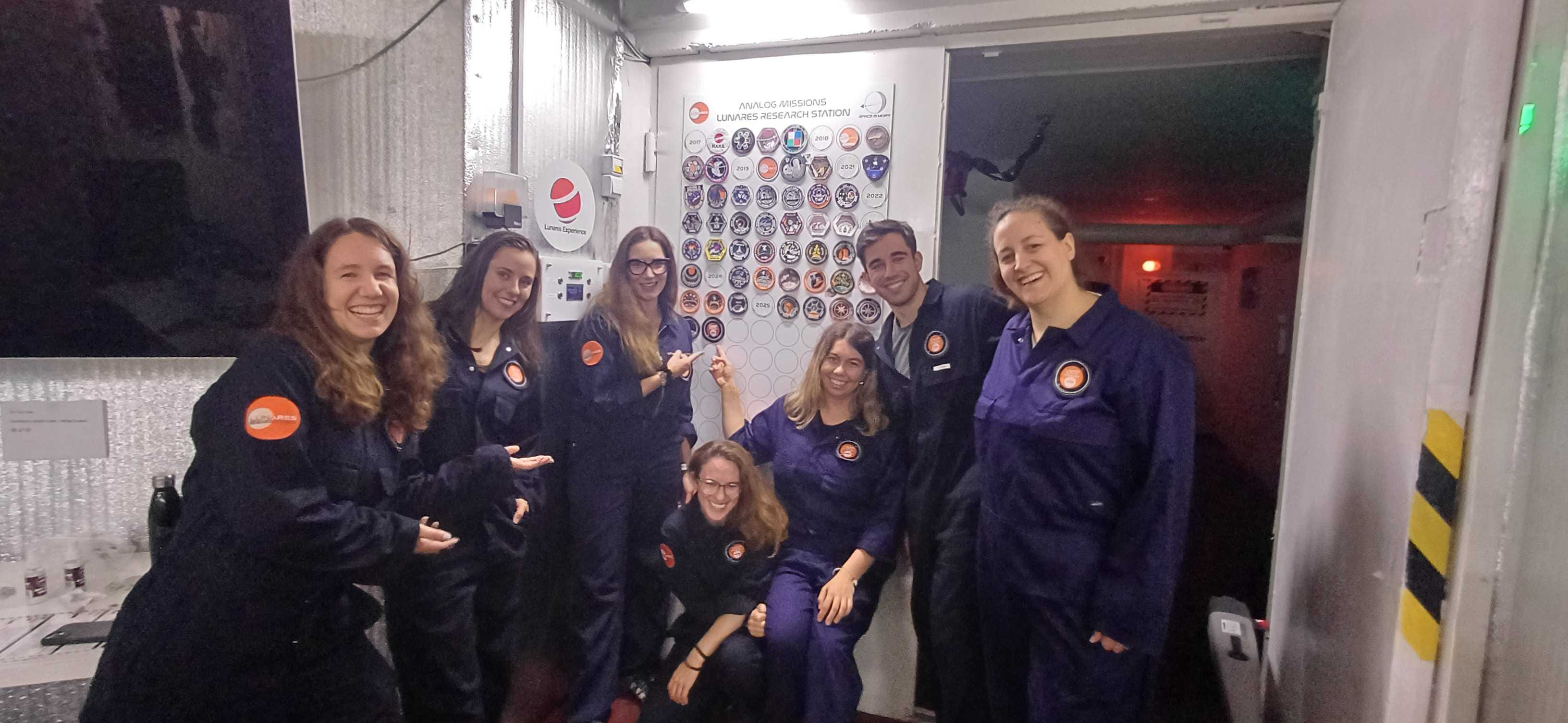
In the last post, I explored the physical side of life inside the habitat: sleep, food, exercise, and health. This time, I want to turn to the social side — what it was like to live, learn, and work with six other people in close confinement.
For five days at LunAres, seven of us shared the same space, the same routines, and the same pressures. We had to get to know each other quickly, find ways to collaborate, and adapt to the quirks and challenges of communal living. Some of it was easy, some of it was uncomfortable, and all of it was a lesson in how people function together in extreme environments.
In this post I’ll cover:
First impressions: how the crew came together on day one, and the early dynamics.
Daily life together: the informal rhythms that helped us bond, from lectures to kitchen chats.
Conflict and adaptation: small frictions, how I managed them, and what I learned about tolerance.
Emotional contagion: why emotions spread so quickly in confinement, and how humour helped.
Communication under pressure: the contrast between relaxed conversations in the habitat and the precision demanded on EVAs.
Leadership and facilitation: how leadership shifted, why rituals mattered, and the strength in accepting help.
Lessons learned: why trust takes time, and why you can’t shortcut the process in high-performing teams.
First impressions
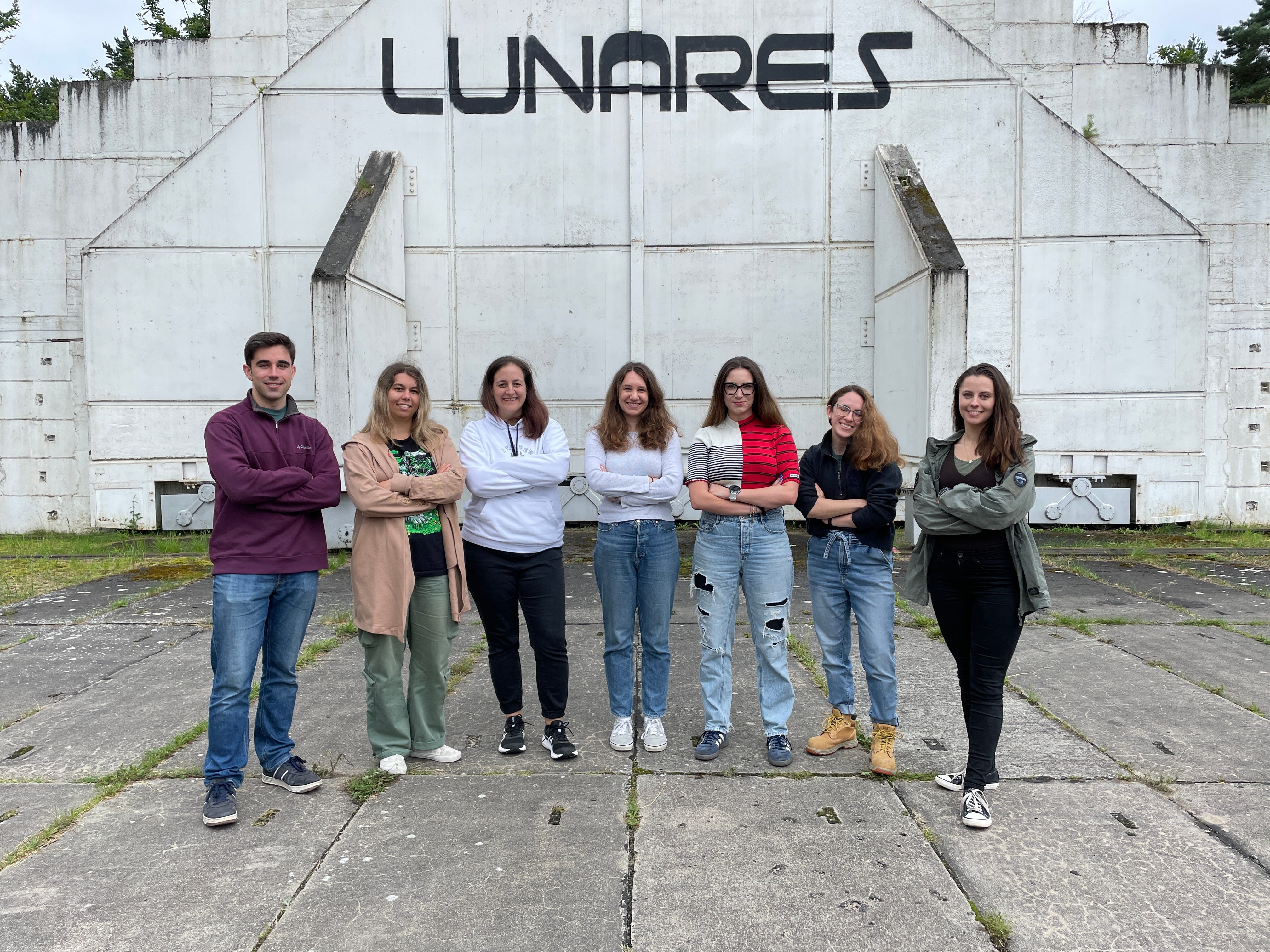
Walking into the habitat for the first time, there was definitely some nervous energy in the air. When I arrived, Anna and Veronika were already there with Agata, one of our instructors. We sat with coffee, waiting for the others. Lucas joined us a little later, shortly followed by Jenn, Natalia and Olivia arriving together after driving up as a group. That car journey had already given them some time to bond, and Anna and Natalia knew each other from the Polish Space Agency. For the rest of us it was still all very new — names to learn, personalities to place, and dynamics to feel out.
I was very aware of being older than the rest of the crew — a 20 year age gap. The instructors were closer to my age, but within the crew itself the difference was noticeable. That said, it didn’t matter in practice, and roles began to emerge quite naturally. I often found myself stepping forward, but I was careful not to take over. Jenn also stood out: with her background as a commercial diver and instructor, she had a natural authority, and I often found myself happy to support when she put forward suggestions.
It wasn’t an instant “team clicks together” moment. The first introductions were slightly awkward, as they usually are in these situations. But even from that first day I could sense that leadership would be shared, moving between us as circumstances demanded rather than resting with one person.
Daily life together
Most days we spent around eight hours in lectures, but it didn’t feel like sitting through a rigid classroom session. Leszek and Agata led us through presentations that mirrored the kinds of things astronauts would cover in pre-flight training, but there was a natural informality. We didn’t just sit in silence taking notes — people asked questions, shared their own experiences, and jumped in when something sparked an idea. It felt more like a conversation than a lecture, which made it far more engaging.
Hearing each other’s stories was one of the best parts. Natalia described a mission that had taken place in total darkness. Veronika talked about one she’d done underwater, where the confinement was so tight they slept in hammocks strung from the ceiling to save space. Jenn shared what it was like diving through caves on expedition. Those details made me realise how much expertise and variety we had sitting around the same table.
Outside the formal sessions, we got to know each other in smaller moments: standing in the kitchen making tea, waiting in line for the toilet, or chatting in the atrium. Once the initial awkwardness wore off, the openness of the group surprised me. People spoke frankly about how they were feeling — tiredness, discomfort, frustrations. Before one EVA, a crewmate admitted to feeling constipated and worried about needing the toilet once suited up. I had the same worry myself, given how often I found I needed to pee. In any other context that might have felt awkward to admit, but in confinement it felt natural. There’s no point hiding things when you are living on top of each other.
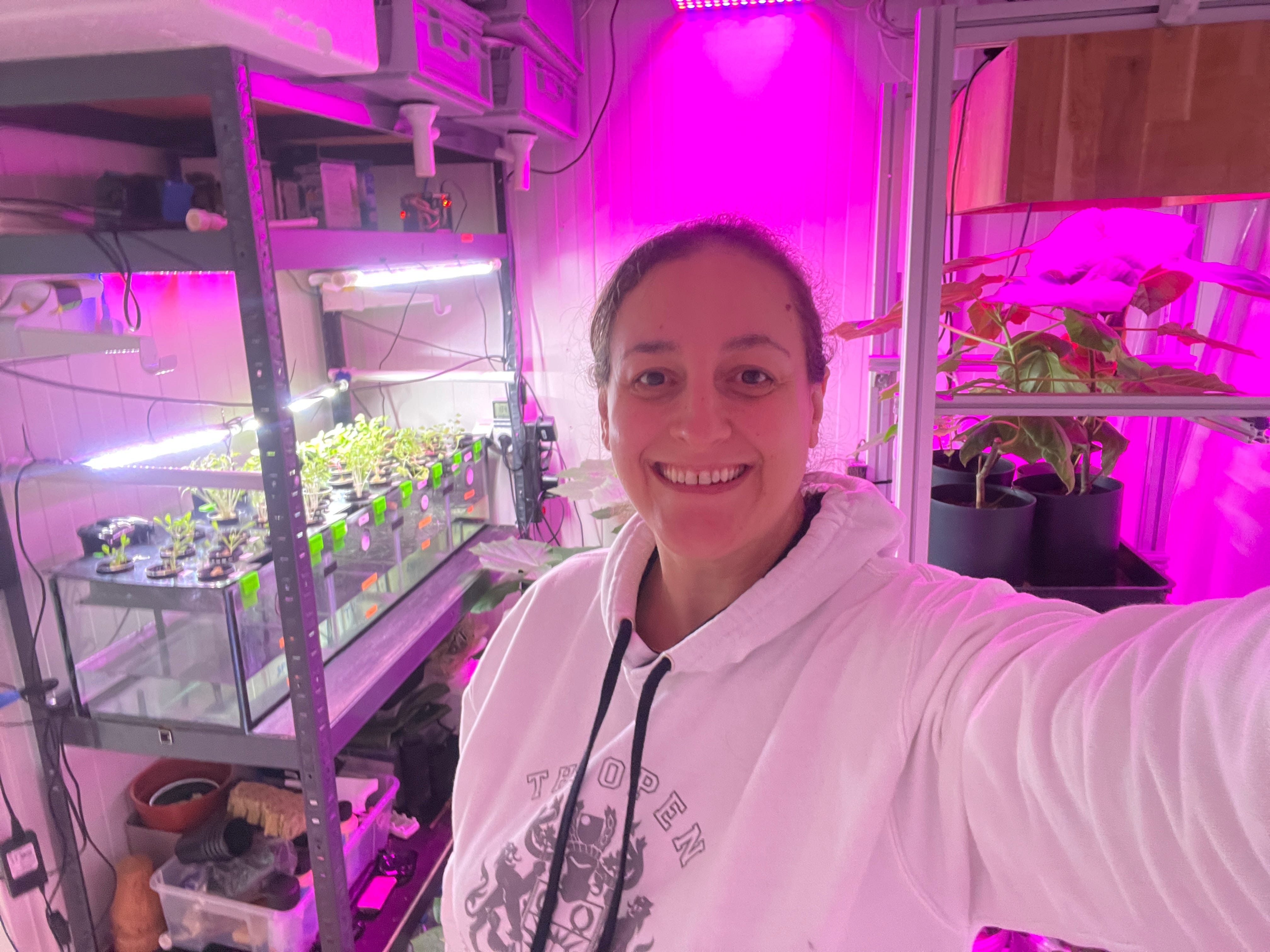
That said, people still found small ways to carve out personal space. A couple of crewmates slipped away now and then for quiet time. I often went into the biolab to sit with the plants and have a few moments of calm. But for the most part, we were together constantly, learning how to share not just the tasks but the realities of daily life.
Conflict and adaptation
Tension is inevitable when you live in close quarters, though most of what I noticed was subtle rather than dramatic. Some things I decided weren’t worth raising. For example, when people stayed up late chatting in the atrium, it kept me awake. I found it irritating, but instead of asking them to stop I chose to adapt — putting on my headphones, playing ocean sounds, and eventually drifting off. It was a small reminder that sometimes it’s not about fixing others, it’s about managing yourself.
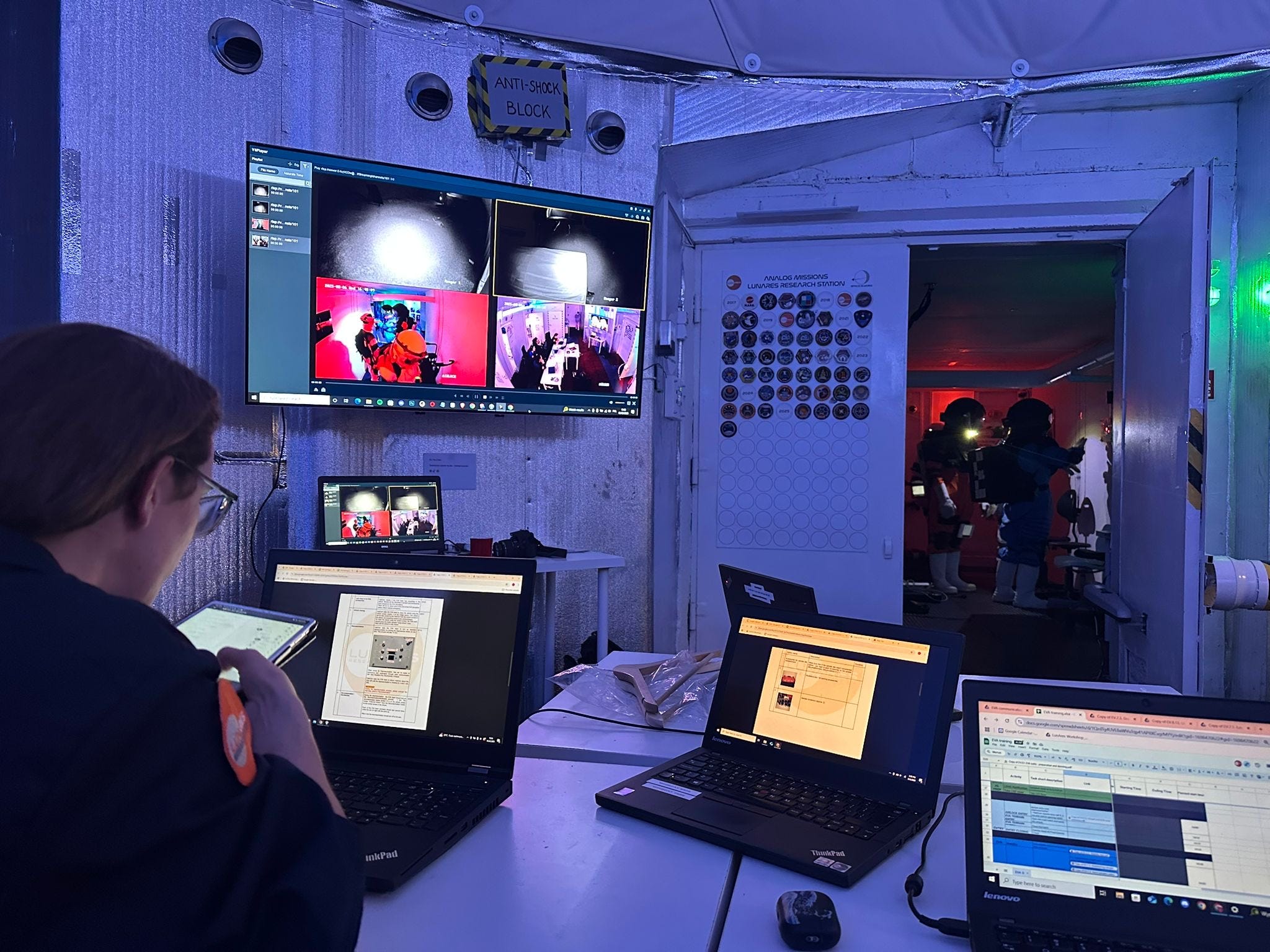
Other moments cropped up during higher-pressure tasks. On one EVA, I was focused on following procedures while my crewmates in HabCom were feeding through input at the same time. I responded a bit abruptly, asking them to give me a moment so I could think. It wasn’t snapping, but it was sharper than I’d normally be. Afterwards one of them came up to me and took ownership of the interaction, which I really respected.
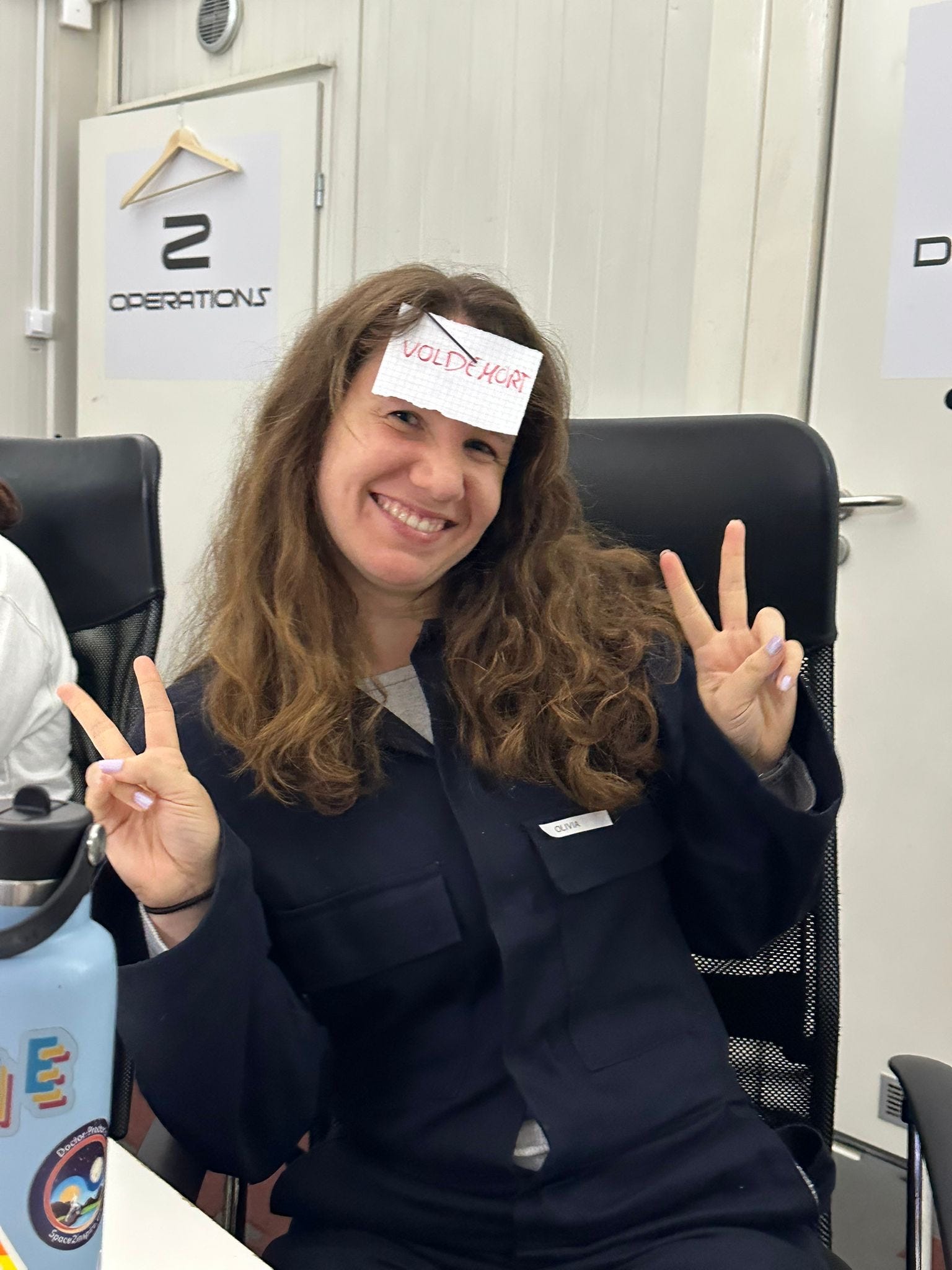
There were also quieter dynamics. Some crewmates were more reserved, especially in the early days when people were still adjusting — and in one case, dealing with heavy jet lag. A few tended to go to bed earlier, or sometimes kept to themselves during downtime. On the final evening, while most of us played a silly “Guess Who” game, one person chose to sit with us but focused on their own work instead. It reminded me how people participate in different ways. I tend to notice who leans into group activities and who prefers to hang back, and in confinement those differences stand out more clearly. Neither approach was better or worse — they were simply different strategies for navigating an unusual environment.
The only decision that really jarred with me was the introduction of alcohol. Champagne was opened twice, once after each EVA. Most of the group toasted with a glass, but Jenn and I didn’t drink. We sat together in the kitchen while the others celebrated. For me, it broke the simulation. Alcohol wouldn’t be available in space, and I thought it was unnecessary. I didn’t push it at the time, but it left me uncomfortable.
Emotional contagion
One of the things I became very aware of during the week was just how contagious emotions can be. On the first day, most people were tired from travelling, and I wasn’t feeling my best either after being unwell before I arrived. I made a deliberate choice not to tell the others how rough I actually felt. As the older crew member, I knew that if I admitted to struggling straight away, it might set the wrong tone. We were still bonding, and the last thing I wanted was to cast a shadow over the experience.
That meant when people noticed me eating very small portions, I had to reassure them: yes, this really is enough for me, don’t worry. Later in the week, when my appetite returned and I was eating normally, it stopped being a talking point. I know my own body, and what it needed at the time wasn’t the same as what others needed from me. What they needed was reassurance, calm, and a sense that things were under control.
I was a bit more open about the mental side, but only once I’d already worked through it. My inner critic had been noisy before the mission — telling me I wouldn’t cope, that I’d fail in some way — but I knew from experience that most of what it says is absolute rubbish. The only way to quiet it was to actually live the experience and prove it wrong. So when I talked about those worries, I put them in the past tense: “I was worried I wouldn’t manage this, but actually I can.” Sometimes it takes one person to say out loud what others are feeling for everyone to realise it’s okay to admit it. The real work of managing that anxiety I did privately, with my usual tools of mindfulness, meditation, and quiet moments in the biolab.
Humour was vital. We laughed a lot, sometimes about the strangest things. In one conversation about bathroom habits, I brought up the meme: “not all pee-pees are poo-poos, but all poo-poos are pee-pees,” and did the voice. Everyone laughed. It broke the tension — those moments were crucial.
I also made a habit of checking in with people if I noticed them being quieter than usual. During EVAs, in particular, I would ask how people were doing, just to make sure they were okay. I was conscious for it not to come across as maternal or overbearing given the age difference, but rather about camaraderie and care for fellow human beings in an unusual and high-pressure environment.
Communication under pressure
Inside the habitat, conversations could be casual and meandering. Out on EVAs, everything changed.
We worked directly from written procedures. HabCom sat inside reading from the screen, guiding each step, while the astronauts followed outside and reported back. The rhythm was simple: instruction given, action taken, confirmation received. There was no room for filler or fluff, no space for interpretation. It had to be clear, factual, and precise.
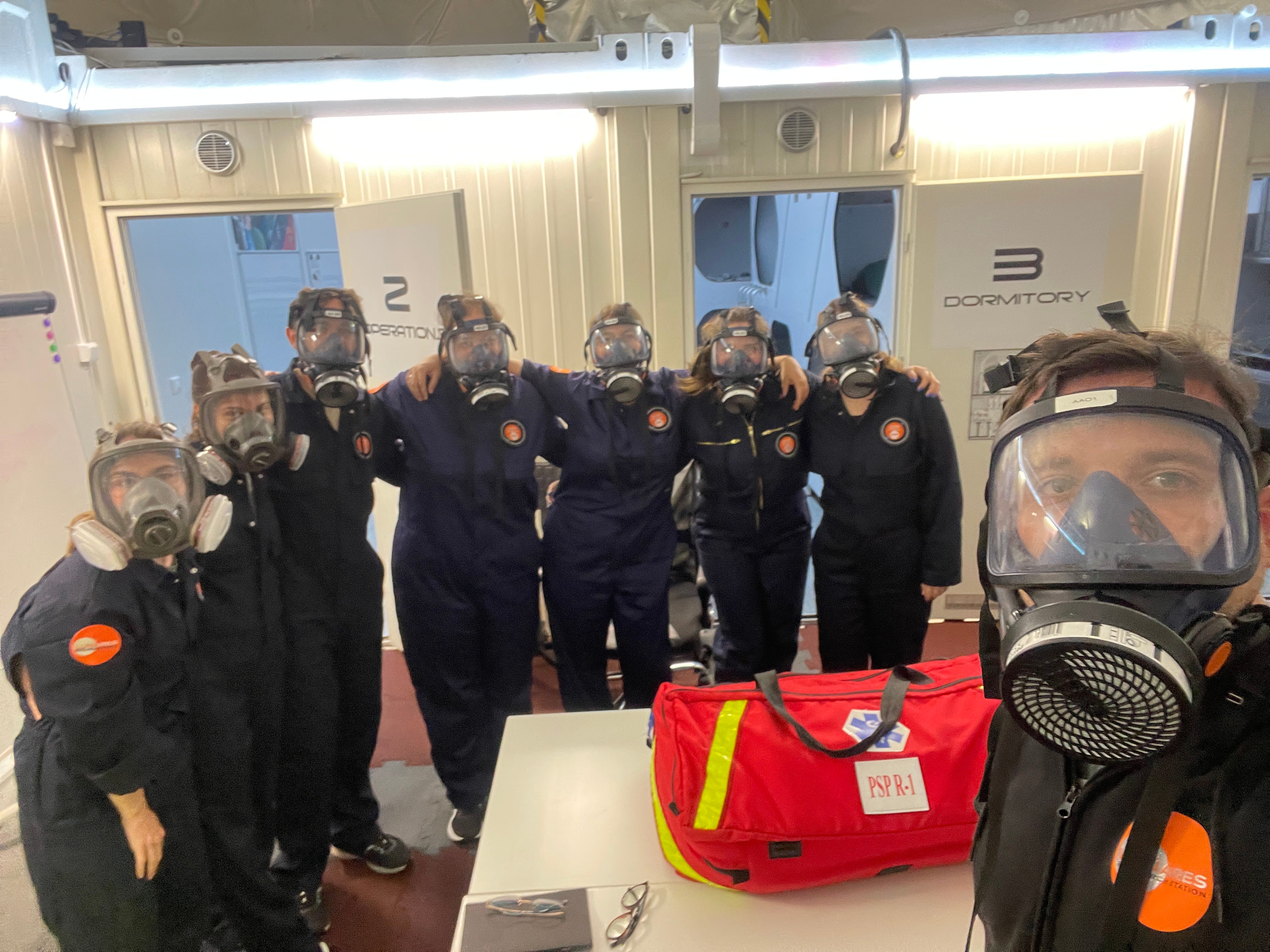
After the first EVA we added something new: wellness checks. One of the helmets had a CO₂ sensor positioned awkwardly at the back, and we suspected that CO₂ was pooling around it. That raised the possibility of inaccurate readings — and worse, of someone actually being exposed without realising. So, on the second EVA, we introduced a simple 1–5 scale. Five meant everything was normal. Anything less than five was a flag to stop and pay attention, because rising CO₂ can bring on headaches, blurred vision, dizziness, and confusion. We used the scale in the airlock while waiting for depressurisation, and again once outside as part of the LEMS suit checks.
The debriefs hammered home how important precision was. Even something as routine as rock sampling needed exact wording: which tool to use, where to place it, how to record the sample. Coming back into the airlock was equally strict. Astronauts didn’t just wander in; HabCom had to confirm that everyone was accounted for, and only then could the hatch be closed. If instructions were unclear, it was on the astronaut to stop and ask, not improvise.
In those moments, the easy informality of the atrium was replaced with a very different discipline. Communication became less about personality and more about safety. It was a glimpse into how, in real missions, human factors hinge on clarity. The words you use can literally make the difference between order and confusion.
Leadership and facilitation
There were no formal leadership roles assigned, but that didn’t mean leadership wasn’t present. It emerged in small, shifting ways. Jenn and I tended to step forward more often, but everyone rotated through roles. We all had turns in HabCom, and we all had turns outside as astronauts with specific tasks to complete. That rotation meant responsibility was shared, and leadership became situational. Sometimes you led, sometimes you followed. Both were equally important.
I noticed that when I wasn’t in the room, people carried on just fine. That reassured me — it wasn’t about one person taking charge, it was about the crew functioning as a system. To me, that’s what real leadership looks like: not holding control, but making sure things can work without you. Good teams don’t rely on a single figurehead. They create an environment where people can step forward when needed, and step back when someone else is better placed to lead. In that sense, leadership and followership are inseparable — each one supporting and strengthening the other.
In group exercises, I naturally slipped into the role of facilitator. I can’t help it — it’s what I do in my day job. Asking questions, drawing out the quieter voices, making sure one person didn’t dominate. Sometimes I deliberately asked the quieter person to go first, just so they had space to be heard. That felt like a valuable contribution, even in a short exercise.
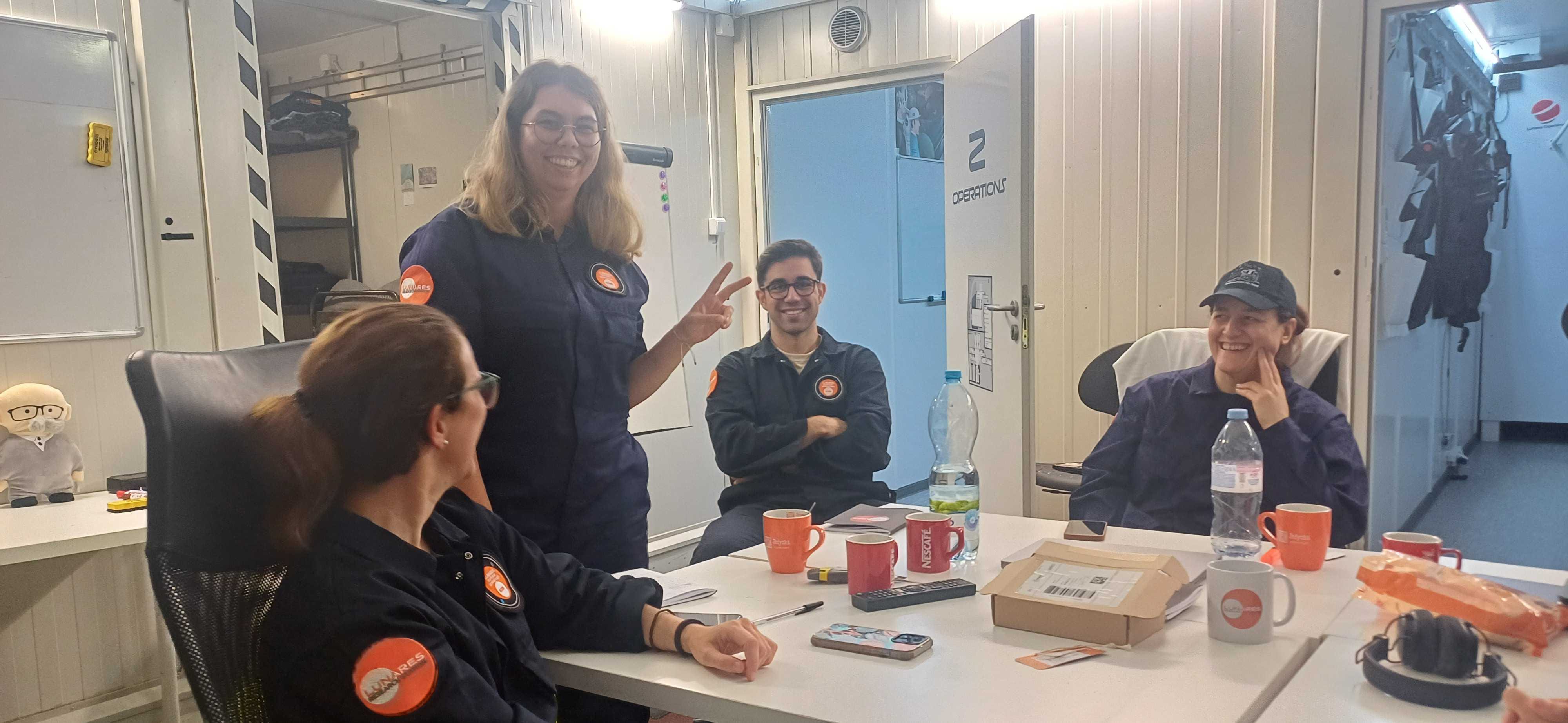
We also created rituals that helped us care for each other as a group. From the second morning onwards, after breakfast and before lectures, we went around the table with one simple question: “How’s everyone feeling?” Jenn suggested it, and it quickly became part of the routine. It gave people permission to be honest. On the day of the EVA, I said I was tired and hadn’t slept well. As a result, the instructors swapped my laptop for a faster one, knowing that struggling with a slow machine would only frustrate me more.
I didn’t resist. I accepted the help. And that felt important too. Too often, people refuse adjustments out of ego — as if suffering through makes them stronger. But in a high-performing team, that kind of ego is counterproductive. Refusing help doesn’t just hurt you, it hurts everyone else. Accepting support is not weakness, it’s strength. It shows care for the people you’re working alongside, and it keeps the whole crew performing at its best.
Lessons learned
If I had to sum up what this mission taught me about leadership, it would come down to openness and humility. Knowing when to step up, and when to step back. Knowing when to share openly, and when to manage things yourself so they don’t drag others down unnecessarily. Emotions are contagious in close quarters, so part of the responsibility is managing your own — but also being honest if you are in real distress so the crew can respond.
Over the week I watched us move through the classic stages of team development: forming, storming, norming, performing, and finally mourning when it was over. That process took time, and it mattered. I was glad the EVAs weren’t scheduled for the first couple of days, because we weren’t ready. Even without outright conflict, subtle tensions needed to settle before we could safely take on high-risk tasks together.
It made me reflect on my past when joining startups, where I was often thrown in at the deep end rather than properly onboarded. In one case I inherited a brewing crisis that had been avoided for months, and I was expected to make tough decisions straight away without knowing the people, the culture, or the organisational dynamics. First impressions stuck, and from that moment I was seen in a particular way that never really shifted. I did the job, but I didn’t enjoy it. As a consequence I left earlier than I might have otherwise.
That’s the difference time makes. At LunAres, we had space to build trust before attempting the hardest parts of the mission. In the startup, we didn’t. Performance doesn’t happen by skipping straight to the end — it comes from trust. And trust takes time to build — there’s no hacks to shortcut it.
Whether in space or on Earth, trust is the foundation of any high-performing team.