

I very nearly didn’t get on the plane.
Whether it was nerves or the flare-up of a chronic condition (or a combination of the two), I woke up on Sunday nauseous and unable to eat. By the time I reached Stansted airport, I’d managed half a Huel bar and little else. My partner coaxed me through it one step at a time: just get to the airport, just get on the plane, just get to the hotel. I knew at any point if it felt too much, I could just abort the mission.
Arriving in Poznań that evening, I tried dinner — a few bites of salad and fries — before giving up and heading to bed empty and exhausted. The following morning I set out for Piła, the town closest to LunAres. I asked the hotel receptionist to book a taxi to the station, and in the drizzle of a Monday morning I watched commuters stream past on their way to work. It was routine for them, but very much out of the ordinary for me, and I was overcome by a sharp sense of sonder.
At the station with its maze of platforms, I killed time with water and mints, still feeling fragile. When the train arrived it quickly filled to standing room only, with a school group heading north to Kołobrzeg, their chatter rising around me. I was grateful for my seat and noise-cancelling headphones, trying to block out the heat and noise as the Polish countryside rolled by. Slowly, I began to feel steadier.
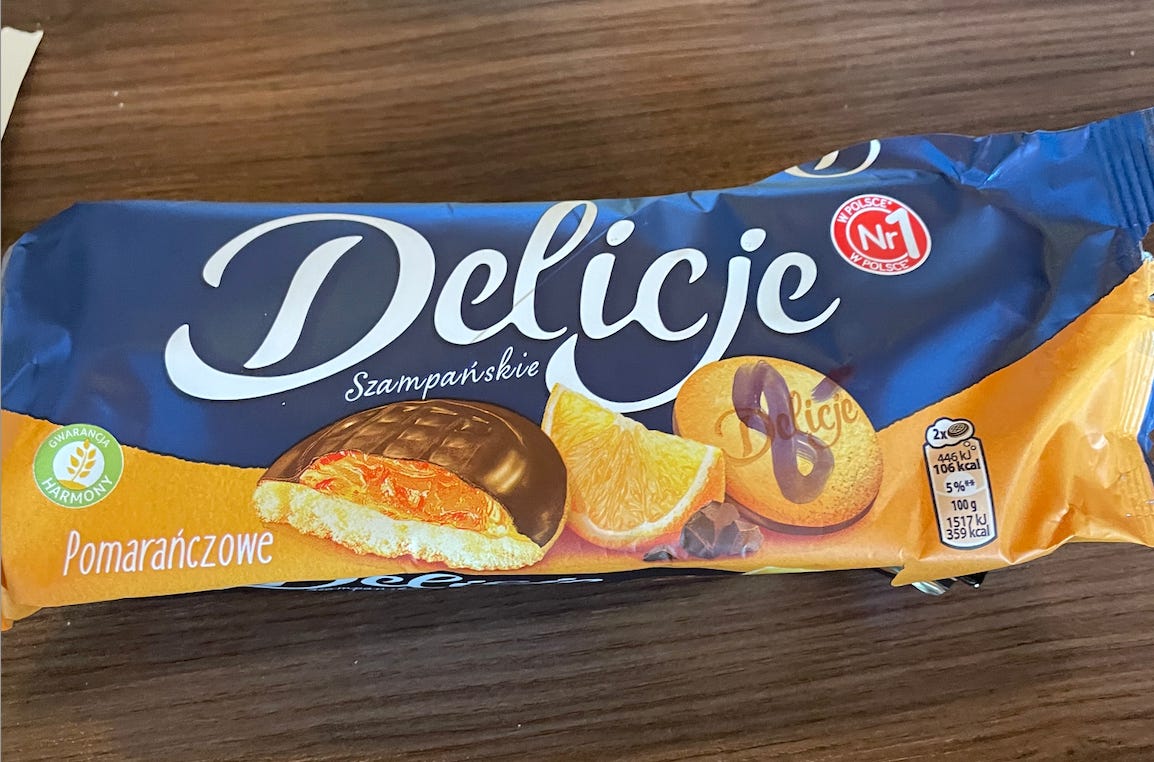
By the time I reached Piła, I even had an appetite again — enough for a coffee and some Polish jaffa cakes while I read in the café. A small moment of peace before what I knew would be a very different week.
An hour later at the taxi rank, my screenshot of the LunAres address turned out to be essential. For the first time while travelling, I felt vulnerable not knowing the language — I have managed to get by in Europe and elsewhere with my Spanish, rudimentary French and guesswork German. But Polish was entirely unfamiliar. After a stop at the ‘bancomat’ to withdraw cash (a reminder that the UK spoils us with digital convenience), the driver wound us out of town, through pine forests and down unmarked roads.
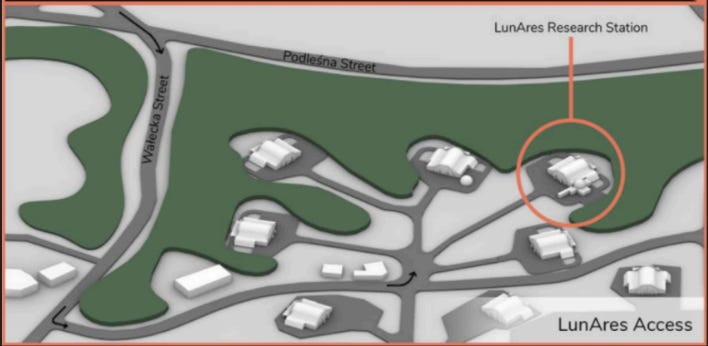
Finally, the habitat appeared: stark white modules clustered under a domed tent, adjacent to the converted aircraft hangar, on the grounds of a disused airfield.
Everything about the journey had felt alien: my poorly, uncooperative body, the unfamiliar landscape, the language barrier. And that was before the real challenge had even begun: locking the hatch and living inside the habitat for the week ahead.
But this week was entirely about testing myself to get out of my comfort zone and experience what it’s like to live without the things that normally keep me sane, and frankly, that I take for granted.
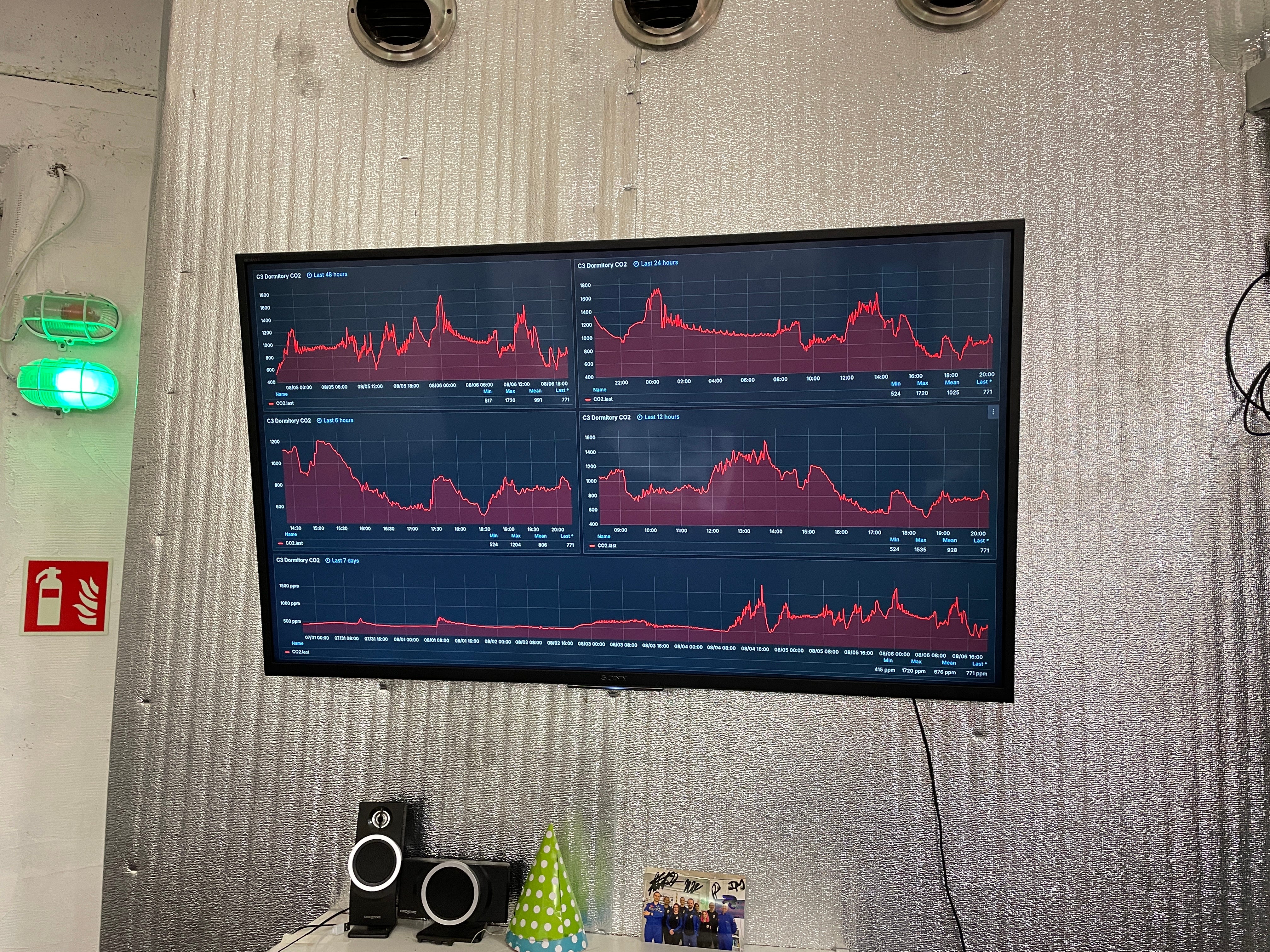
When I arrived at the habitat, I was greeted by another participant, Veronika, and one of the instructors, Agata, who handed me a much-needed coffee. By midday the full crew had assembled. After introductions and an overview of the week, we toured the habitat and were assigned roles. Mine was to monitor CO₂ levels in the dormitory each night, ensuring ventilation was working so we could all sleep safely (without asphyxiating ourselves!). Others took responsibility for the grey water system, cooking, or equipment checks.
Very quickly, our attention turned to the basics of human survival. Sleep, water, air, food, hygiene — things we rarely think about outside — became deliberate, structured parts of daily life inside. This is where human factors come into play: understanding people not as isolated individuals but as biological, psychological, and social systems embedded in a wider environment. In confinement, my wellbeing depended as much on the crew’s management of these fundamentals as on my own routines. Over the next few days, I had to adapt those foundations to the realities of life inside.
Air quality and environment
The habitat’s air was constantly filtered and ventilated, but the sensory environment was still a big part of daily life. Smells carried easily through the modules. The toilet was the most challenging: it worked, but when you were in it, it stank, and the smell grew worse as the mission went on.
Noise was another constant factor. The fans and ventilation systems created a steady background hum of white noise. The airlock door had a siren to notify it was opening, which was loud and intrusive — we could silence it during the early morning when exercising, otherwise we kept it on.
Temperature also fluctuated depending on the time of day. The hab itself isn’t particularly well insulated: the roof is a thin tent, and the modules are shipping containers. Outside temperatures had an influence on internal conditions, although we could also change this with the controls. Because of the size of the atrium, even having the thermostat whacked up to 28 degrees would mean it would only get to about 24 degrees (when people were feeling cold, we huddled with our blankets).
These factors — smell, noise, and temperature — might seem minor compared to food or sleep, but they matter because they constantly pull the body away from its equilibrium. In other words, confinement puts pressure on homeostasis — the body’s drive to keep everything in balance — and that stress becomes part of the system you have to manage.
Sense of time
Our sense of time isn’t just a mental construct — it’s rooted in biology. Deep in the brain, the circadian clock regulates sleep, hormones, body temperature, and alertness on roughly a 24-hour cycle, with light as its most powerful cue. When sunlight and natural rhythms are stripped away, as they are in space or inside an analogue habitat, this internal system quickly loses its anchor. The result isn’t just a psychological shift, but a physiological disorientation, where the body struggles to stay aligned with the passing hours.
I noticed this almost immediately. Outside the habitat, I pride myself on being able to tell the time accurately without looking at a clock — a little party trick of mine (yay, autism!). Inside, that ability seemed to vanish. With no sunlight or natural cues to anchor the day, I often felt disoriented.
My Fitbit helped me keep track, but even with it, time seemed to blur. Days blended into one continuous stretch of activity, training, meals, and conversations. At times it felt confusing; at others, it was almost like being in a state of flow, where hours passed without me realising.
This is a common effect in analogue and space missions, where the body’s internal clock struggles without external cues. It’s a reminder that our sense of time isn’t just psychological — it’s a biological system too, shaped by light, routine, and environment. When those anchors are stripped away, you realise just how dependent we are on them for orientation and stability.
Sleep
By the end of day one, we were all exhausted. Most of us went to bed around 10 p.m., though a couple stayed up in the atrium until close to midnight. It quickly became clear who the morning people were and who were the night owls.
That first night I struggled. The chatter, the lights, the unfamiliar surroundings — all of it made it hard to switch off. I tried my Loops and an eye mask, but only with moderate success. At home, I control my environment completely: I even sleep in a separate room from my partner so we don’t disturb each other with snoring. In the habitat, I didn’t have that luxury. The only thing I could control was my own response.
Eventually I accepted that my frustration was keeping me awake as much as the noise. I swapped the earplugs for noise-cancelling headphones, played ocean sounds on my phone, and finally drifted off. A snoring crewmate woke me in the night, but again — headphones back on, self-soothing, and eventually sleep returned. I woke at 7 a.m. ready to exercise, tired but functioning.
Sleep is the foundation I prioritise above all the others — nutrition, hydration, personal care. Without it, everything else suffers. Inside LunAres, it was under constant threat: no natural sunlight, no windows, no fresh air. Our circadian rhythms weren’t set by the environment but by artificial lights programmed to dim around 10 p.m. and brighten at 8 a.m., just as they are on the ISS (which itself orbits Earth 16 times every 24 hours — yes, that’s 16 sunsets and 16 sunrises every day).
Some of my crew mates had nightmares, which is actually very common on analogue missions. I didn’t, but I did experience unusually vivid, intense dreams that left me unsettled in the mornings. Another reminder that even when you manage to sleep, the brain is still working hard to adapt.
Nutrition
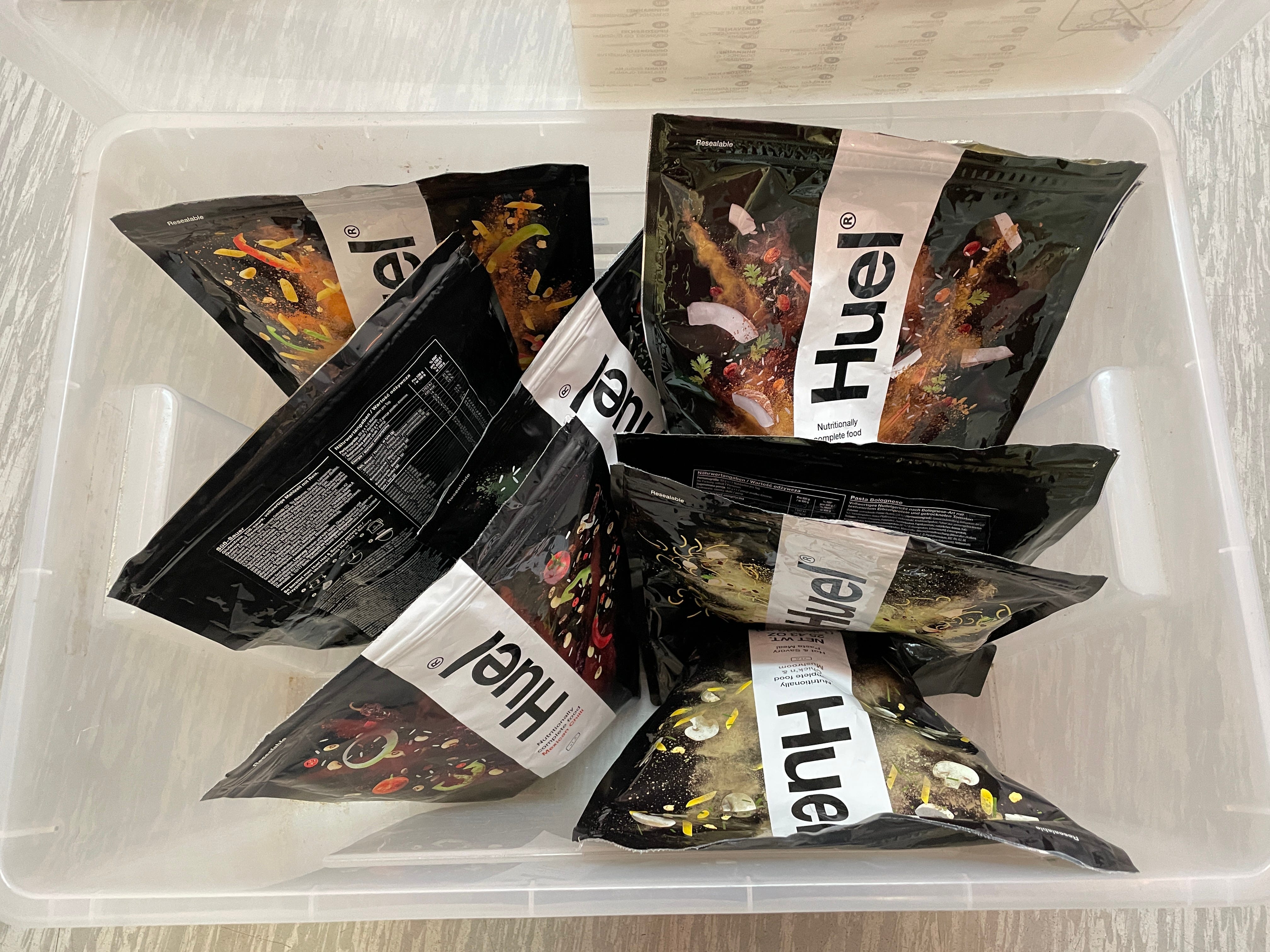
Food inside the habitat was simple but adequate — though it could easily have become repetitive. In our food supplies we had a mix of Huel (freeze-dried powder meals), grains, pasta, beans, canned foods, and spices. Technically we were not supposed to have stimulants or relaxants like coffee, sugar, or alcohol, mainly because these could impact the results of the psychological experiments run on missions. Meals did the job of fuelling us, but they weren’t going to be indulgent.
That said, we were actually spoiled compared to a real analogue mission. On the first evening, before we sealed the hatch, we ordered burgers from a takeaway. The second day, our instructor Leszek surprised us with pizza. On Wednesday, while we were out on EVA, Agata cooked for us so we returned to a hot meal. Thursday’s menu was a mix of leftovers and Huel. We also tried pierogi one lunchtime — traditional Polish dumplings stuffed with cheese, mushrooms, sauerkraut or fruit — delicious! The variety kept morale up, especially after long training sessions when we had neither time nor energy to cook.
For astronauts, nutrition is a far more serious business. Meals are carefully planned to meet individual requirements, and long shelf life is essential — 18 to 24 months in most cases. Food is preserved by freeze-drying, vacuum-sealing, or even canning. Salt content is reduced because in microgravity the body retains sodium differently, increasing acidity and accelerating bone loss. Despite these constraints, the menu has evolved well beyond “space paste.” Astronauts today eat curries, omelettes, burritos, sausage and mash, even bacon sarnies — familiar foods designed to deliver comfort as well as calories.
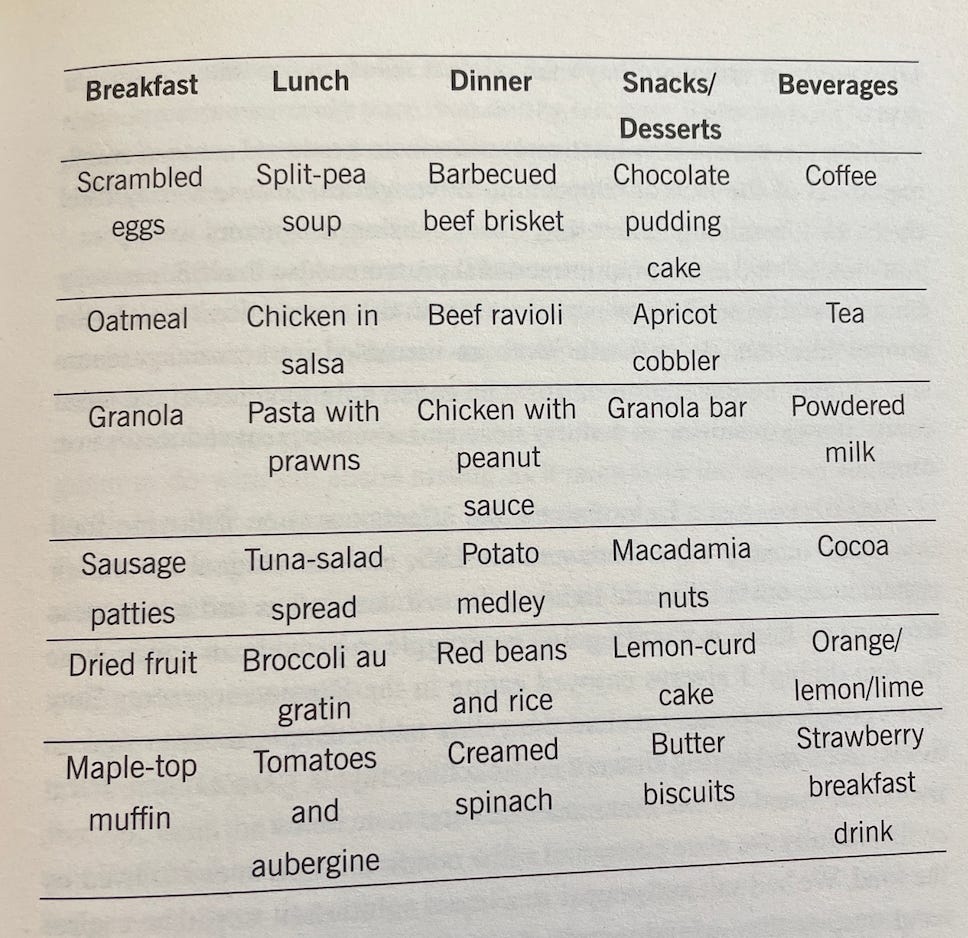
Our experience at LunAres was a reminder of both realities — that food in confinement can quickly feel monotonous, but it’s also one of the few ways to create comfort and community in an otherwise controlled environment.
Hydration
Hydration was one of the easier routines to overlook inside the habitat. Without natural cues like sunlight, fresh air, or a change of scenery, thirst didn’t always register in the same way. But even mild dehydration can make a big difference — research shows that just a 1–2% drop in hydration levels can impair cognitive function, reducing attention, working memory, and decision-making. In a confined environment where performance really matters, that’s not something you can afford to ignore.
We did have caffeinated coffee — freeze-dried rather than fresh, but still enough to keep people from experiencing withdrawal symptoms. Herbal teas were popular too, both for hydration and comfort. I made sure I was drinking enough water by using a 1-litre bottle, refilling it once it was completely empty and aiming to do that at least twice a day. I also used this water for brushing my teeth.
I knew I was hydrated because I was peeing — a lot. Without natural sunlight to anchor the body’s rhythm, it often felt like I needed to go every 60-90 minutes. I’m someone who generally does go a lot anyway, but this felt excessive!
Exercise
It was really important for me to maintain my exercise schedule as I like to do it first thing in the morning. Back home, I go to the gym three times a week and I lift heavy weights - it feels good. It sets me up for the day with my mental health and my physical health with endorphins pumping around the body. In the habitat, I didn't have access to the same kind of equipment. There was an exercise bike and a treadmill for cardio and a set of small dumbbells for weights. At one point I even joked about using the packs of water bottles which at 6 bottles of 1.5 litres equated to 9kg. More than 3kg dumbbells!
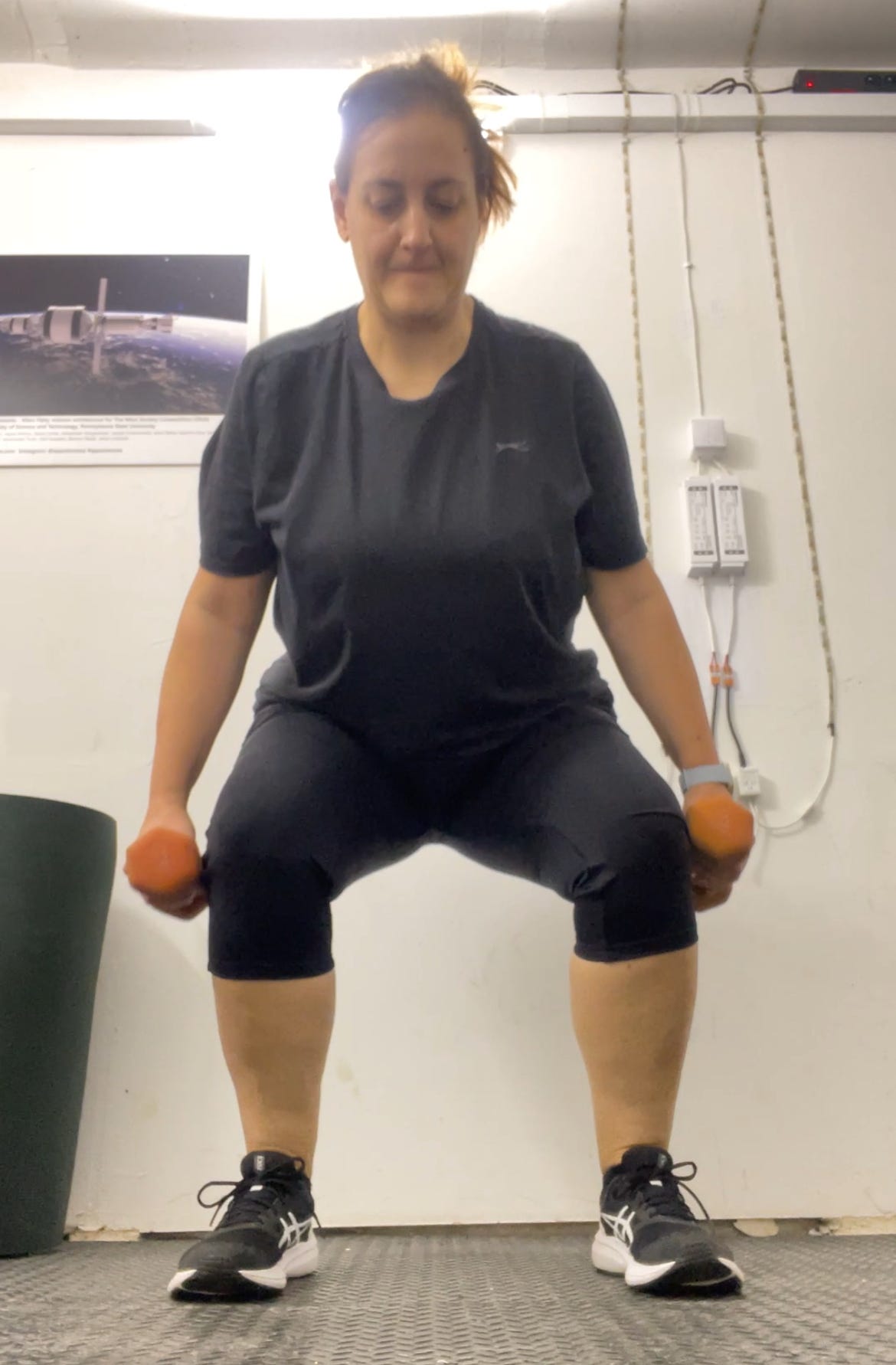
Instead, I figured out that I would work out every day rather than every other day, as the workout intensity and weights would be lower than usual. So I worked out on the Tuesday morning and the Wednesday morning. I didn't work out on Thursday morning because I had the EVA and knew I'd need to conserve my energy. From the previous day, I knew it was very physically demanding. Then Friday I was exhausted after the EVA, so I didn't work out then either.
Hygiene and personal care
Basic hygiene inside the habitat was simple enough to keep up with, but it required more planning than in everyday life. We had a washing machine for laundry, a single shower, and one toilet for the crew. The shower schedule more or less worked itself out because people woke at different times, though after an EVA there was usually a rush as everyone wanted to wash off. The toilet, though, was the real bottleneck. With seven people sharing and training sessions back-to-back, queuing was inevitable.
What struck me was how much more open people were about their toilet needs. In everyday life we rarely talk about this, but in confinement it became normal. Before one EVA, a crew mate confided that she was feeling constipated and worried about needing the bathroom once suited up. I had similar concerns — and they came true. After suiting up, there was a delay in starting our EVA because of a small electrical fire from the LED lights, and of course that was exactly when I realised I needed the toilet. Cue stripping down and racing to pee and get back!
In real spaceflight, these issues are taken very seriously. Astronauts wear MAGs (Maximum Absorbency Garments) during launches and EVAs — effectively high-tech nappies — so they can stay suited for hours without risk. At LunAres, we had the option to use diapers for a “full analogue experience,” but I decided to pass on that one.
Immune system
Living in confinement also meant paying attention to immune health. With no natural sunlight, we were advised to take vitamin D supplements daily — a small but important safeguard for bone health, mood, and immunity. I carried on with my own supplement routine too, taking multivitamins, inositol, omegas, and collagen (can you tell I’m a veggie?).
Even on a short mission, the body makes its needs known. One crew mate experienced cramp during the night and was quickly given a magnesium supplement and told to eat a banana for extra potassium. It was a simple fix, but it highlighted how closely small imbalances are monitored. In space, those ‘minor’ issues can escalate quickly if not addressed.
Sexual and reproductive health
Sexual health was also mentioned in our training, and it highlighted an interesting dynamic of confinement. On one analogue mission, the crew were asked to take part in research about sexual health and relationships. What was meant as a routine survey quickly became a dominant theme of conversation. Isolated from the outside world, with little else to distract them, the very act of being asked about it primed the crew to focus on it more than they might have otherwise.
In real spaceflight, sexual and reproductive health is treated as part of overall crew wellbeing, even if it’s rarely discussed openly. NASA and ESA don’t provide much public detail, but it’s recognised that factors like intimacy, reproductive health, and hormonal changes all matter when planning for long-duration missions. Just like sleep or exercise, sexual health is part of the broader picture of human adaptation to extreme environments — and another reminder that astronauts aren’t just explorers, they’re people.
For me, the issue of reproductive health showed up more practically. As I’m in peri-menopause, I use HRT patches, and because my periods are irregular I packed supplies just in case it arrived while I was in the habitat (thankfully it didn’t).
During the mission I became aware of how much effort goes into simply keeping the body working well. Sleep disrupted by noise and light, food that was fuel but could quickly become monotonous, hydration that had to be measured, hygiene managed collectively, even the smells, sounds, and temperatures of the habitat — each one affected how my body performed day to day.
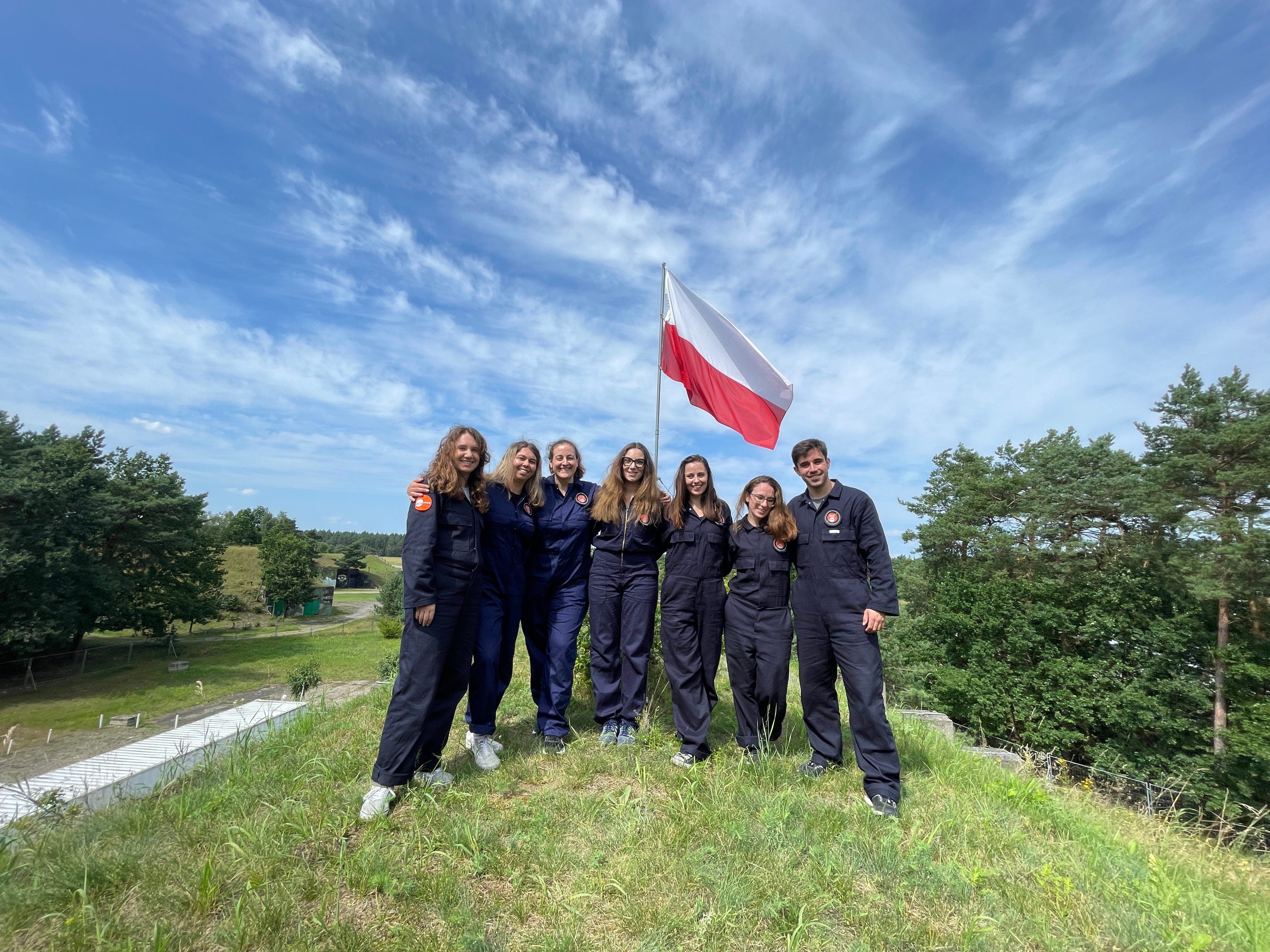
In everyday life, we take these things for granted. Inside LunAres, they became deliberate routines that demanded attention. The smallest details — when you ate, how you exercised, who took the first shower — shaped how well you functioned. I tracked some of this with my Fitbit, and LunAres often runs studies where analogue astronauts wear sensors to monitor heart rate, temperature, and sleep cycles (known as ‘human telemetry’). In spaceflight, this data is critical: it shows in real time how the body is adapting — or struggling — in response to environmental stressors.
Keeping the body at optimum performance wasn’t separate from the mission: it was core to the mission. And those physical foundations didn’t just sustain the body; they underpinned mood, focus, and resilience. In the next article, I’ll turn to that other side of the system: the psychological adaptations that made the difference between just surviving confinement and thriving within it.
If you’re interested in learning more about your own biological needs (as well as psychological and sociological), then you may find my Baseline Needs Map a useful exercise to complete. Download your own copy here.