

It's Monday, and whilst I've been back from my space analogue mission for a few days now, I'm still very much processing everything that happened. I've given some thought to how I'm going to share what I learned whilst on the experience. What I've settled on is a series of Substack posts.
In this first post, we're going to look at:
What is an analogue space mission?
Different habitats around the world where it's possible to live like an astronaut.
Why they're important, particularly for the national space agencies.
Why I wanted to get involved in one.
Let’s go! 🚀
What is an analogue space mission?
Let's start with a definition of an analogue space mission. According to NASA, analogue missions take place in locations that have natural or engineered physical similarities to extreme space environments. These analogues provide space agencies with data about the strengths and limitations of human exploration systems, such as the effects of isolation, confinement, gravity, and hostile environments to help prepare for future missions to the Moon, Mars, and beyond.
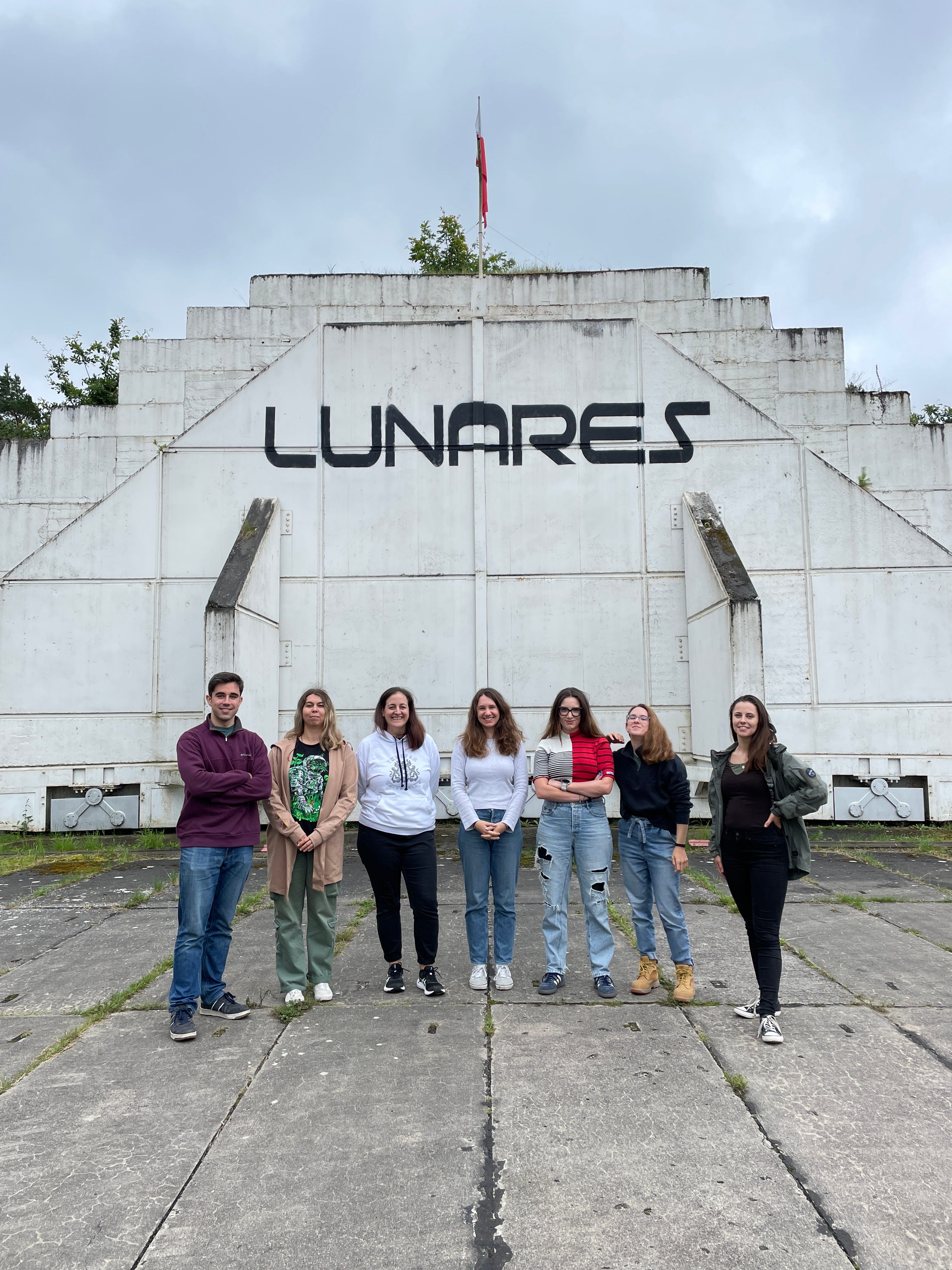
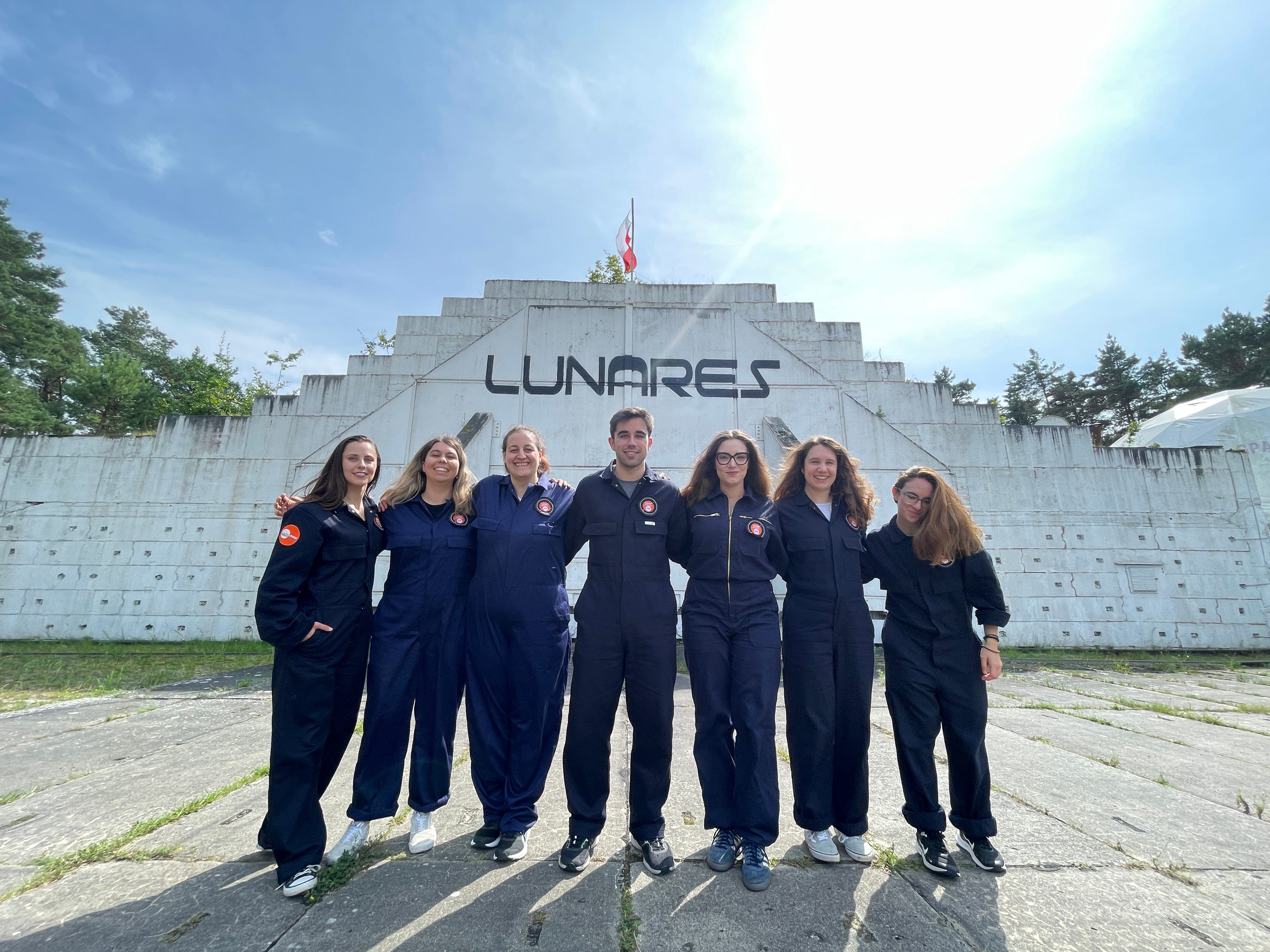
At LunAres, this is brought to life in a controlled, modular lunar habitat. It provides a research environment focused on investigating one or several aspects of crewed space missions using earthly, real-life situations as an analogue to an off-world scenario, as LunAres Director Leszek Orzechowski puts it.
Space analogues can be found all over Earth, from the Arctic Circle to Antarctica, from remote desert areas in the US to caves and deep sea habitats. Their locations are carefully chosen to best represent different kinds of environments that space crews are likely to encounter on missions, both in space and on the surface of different planetary bodies:
Extreme cold (e.g. Concordia Station in Antarctica)
Different geological strata for sampling (e.g. HI-SEAS in Hawai’i)
Remote locations that are hard to reach and tucked away from civilisation (e.g. Mars Desert Research Station in Utah)
Particularly in the case of underwater, representing the effects of microgravity through neutral buoyancy (e.g. NEEMO in Florida)
They can also be used as a training aid for space astronauts. Dr. Sian Proctor, who I'm a big fan of, trained here as part of the LunAres III SPECTRA mission. The space agencies use analogue missions alongside other types of astronaut training, including neutral buoyancy labs, parabolic flights, and virtual reality simulations, to get them ready for living and working in space.
Analogue missions are not simply about cosplaying or LARPing as astronauts. They are scientific research expeditions that give engineers, scientists, and psychologists insight into how humans live and work in space. To do this safely on Earth before getting into space is a key factor in de-risking processes and technology and testing assumptions before doing it for real. After all, space can be deadly.
And analogue missions are not just for astronauts; they also train mission control teams, test new tech, and prepare procedures. In fact, when we were conducting the ExtraVehicular Activities (or EVAs as they are most commonly known), it was just as important for us in HabComm (habitat command) to run through the procedures and give feedback on their clarity so they can be improved as well.
What’s it like at LunAres?
The building is an old aircraft hangar on a former airfield located in Piła, Poland. The hangar itself has been added to with a selection of shipping containers arranged around a central atrium covered by a giant domed tent. All the buildings from the outside are coloured white with several access points in different containers. The building has some thermal insulation, but still experiences the extremes of temperature fluctuations throughout the seasons. It’s a non permanent structure — essential as the planning regulations require that it can be moved at any moment.
Layout
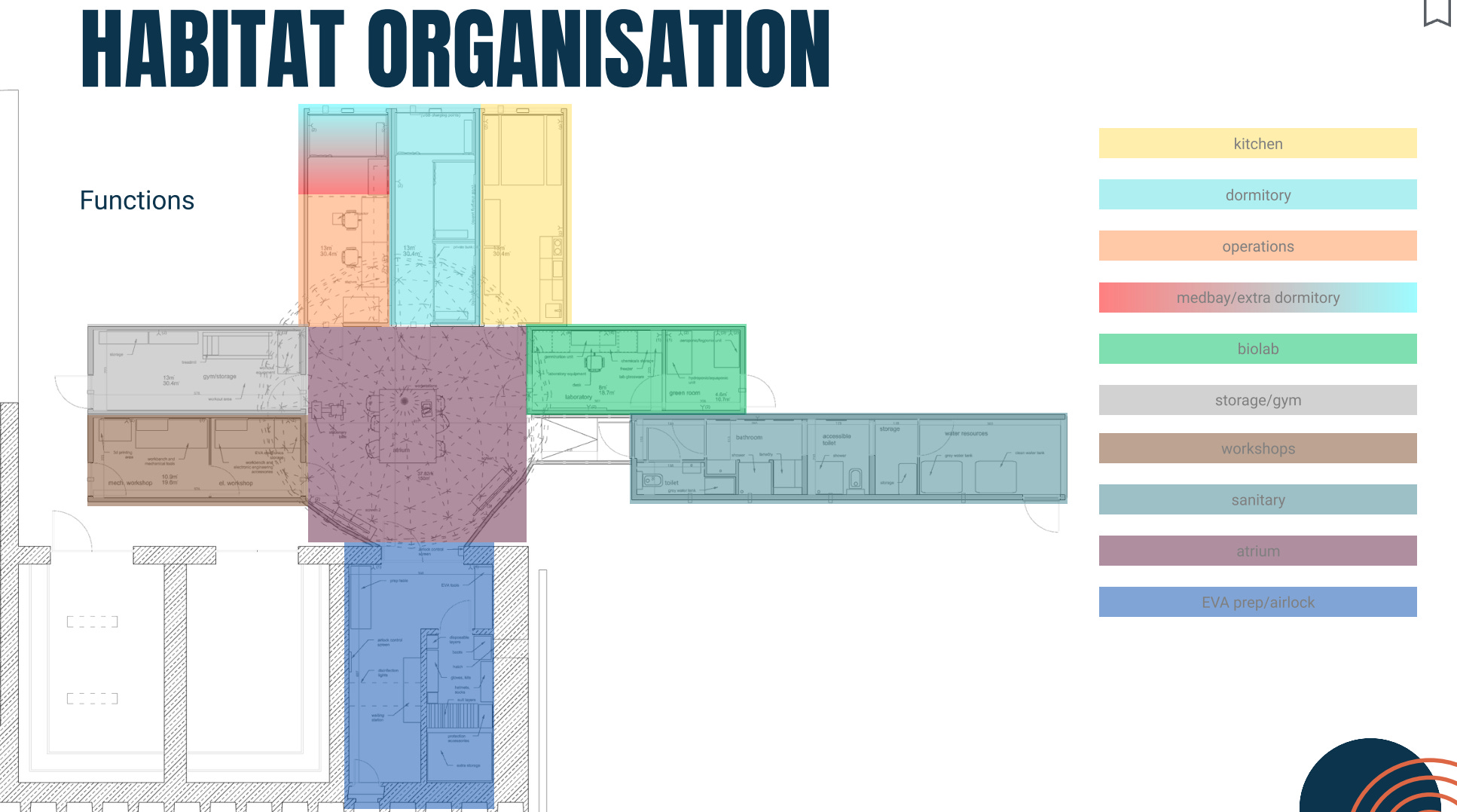
The central atrium is the hub of the habitat where we spent a significant portion of the mission. Off this central atrium is:
A kitchen with food prep and dining areas
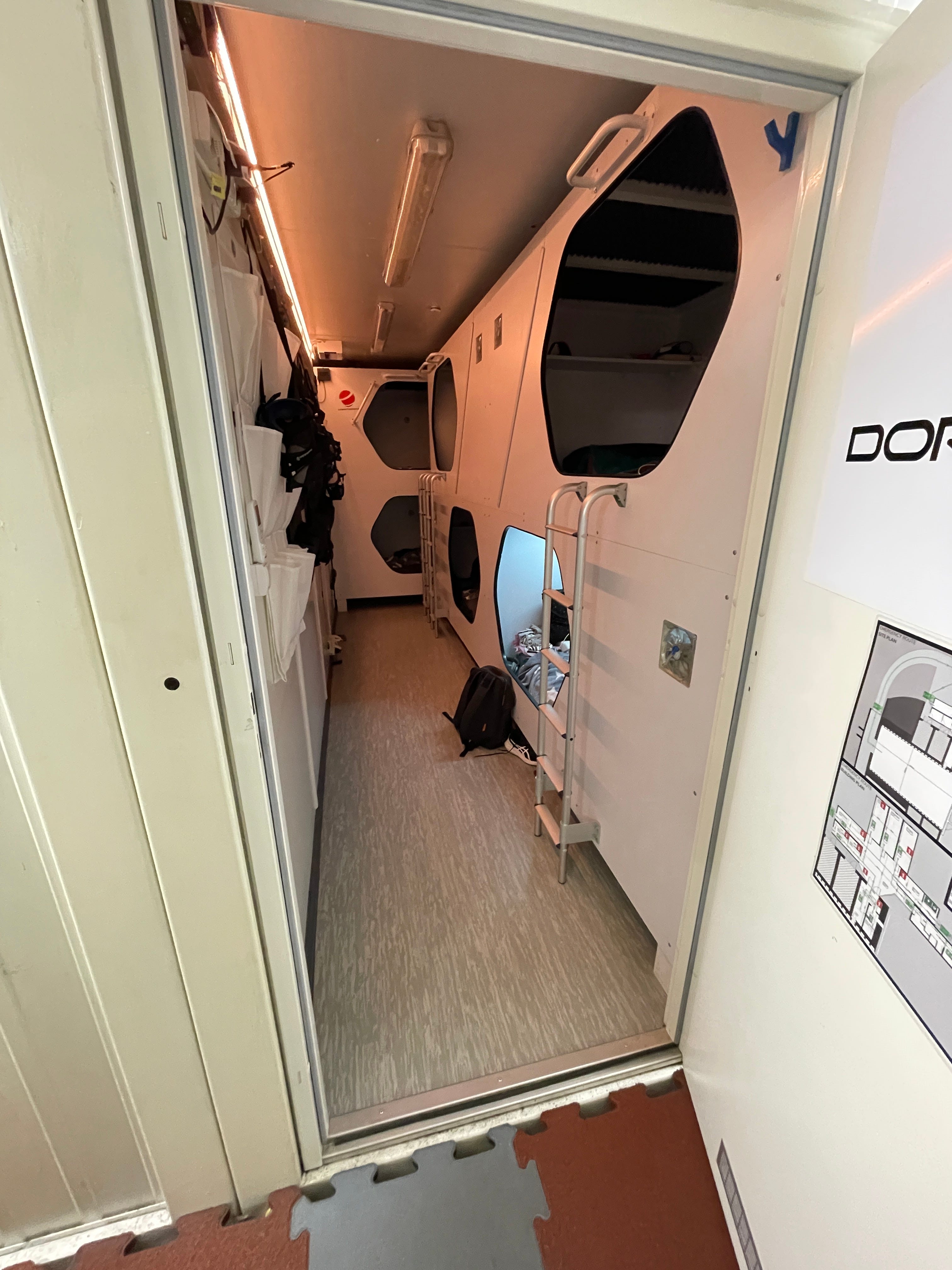
A dormitory that houses six sleeping pods
A further container that houses an additional two sleeping pods, medbay and operations
A storage unit
A workshop for electrical and mechanical equipment
A biolab for biology experiments and growing food
A sanitary unit with the toilet and shower, which includes adaptations for disabled astronauts
Access to the airlock
Living quarters
Inside the habitat, the walls of the main atrium are covered with a silver insulation. There are no windows to the outside (because glass is a poor thermal insulator), and when the instructors left at the end of the first day, we locked ourselves inside the habitat at all exit points. We were provided with vitamin D supplements to take daily, but I already take a multivitamin that includes a high dose of vitamin D, so I felt it was not necessary to add more.
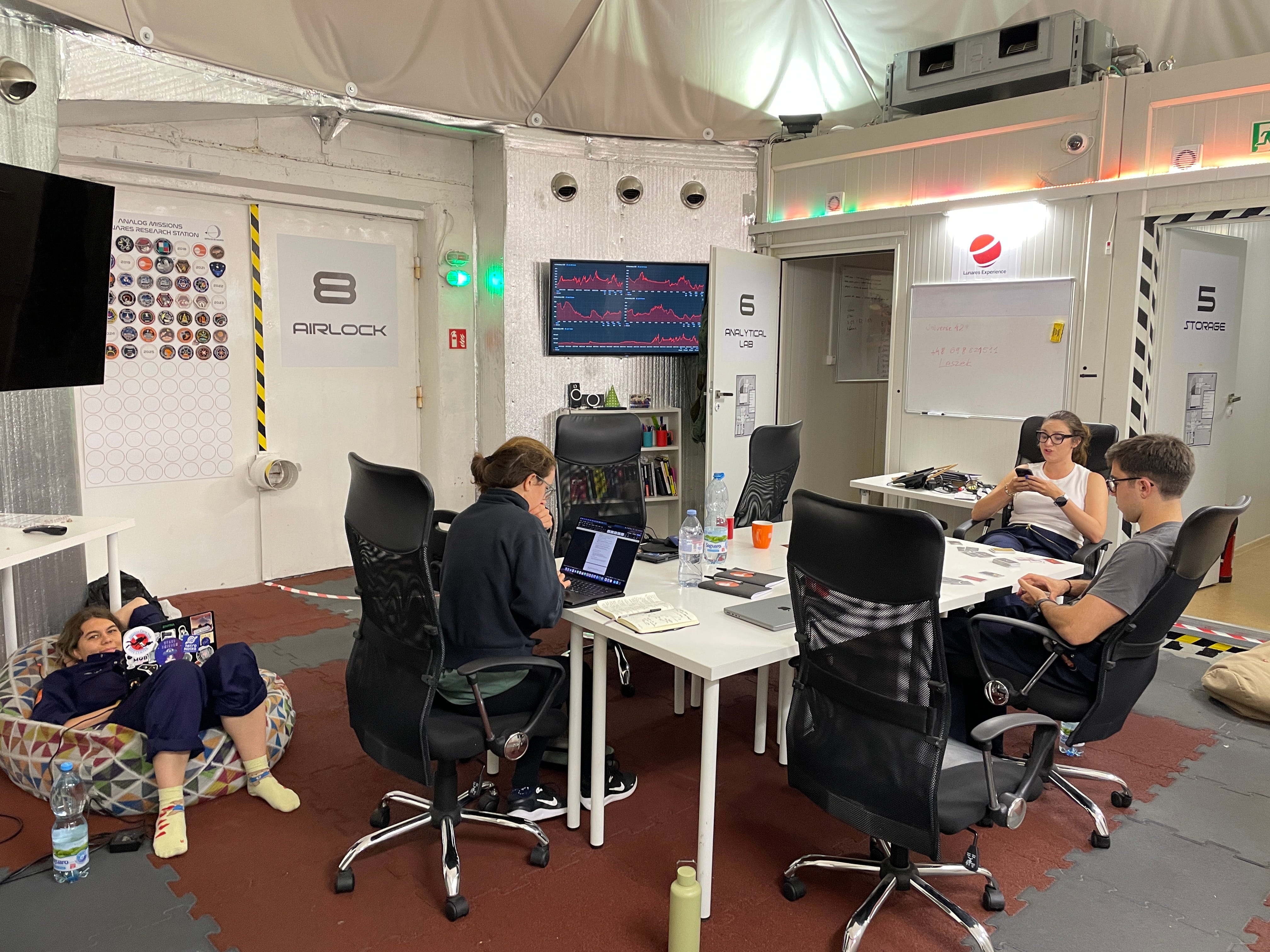
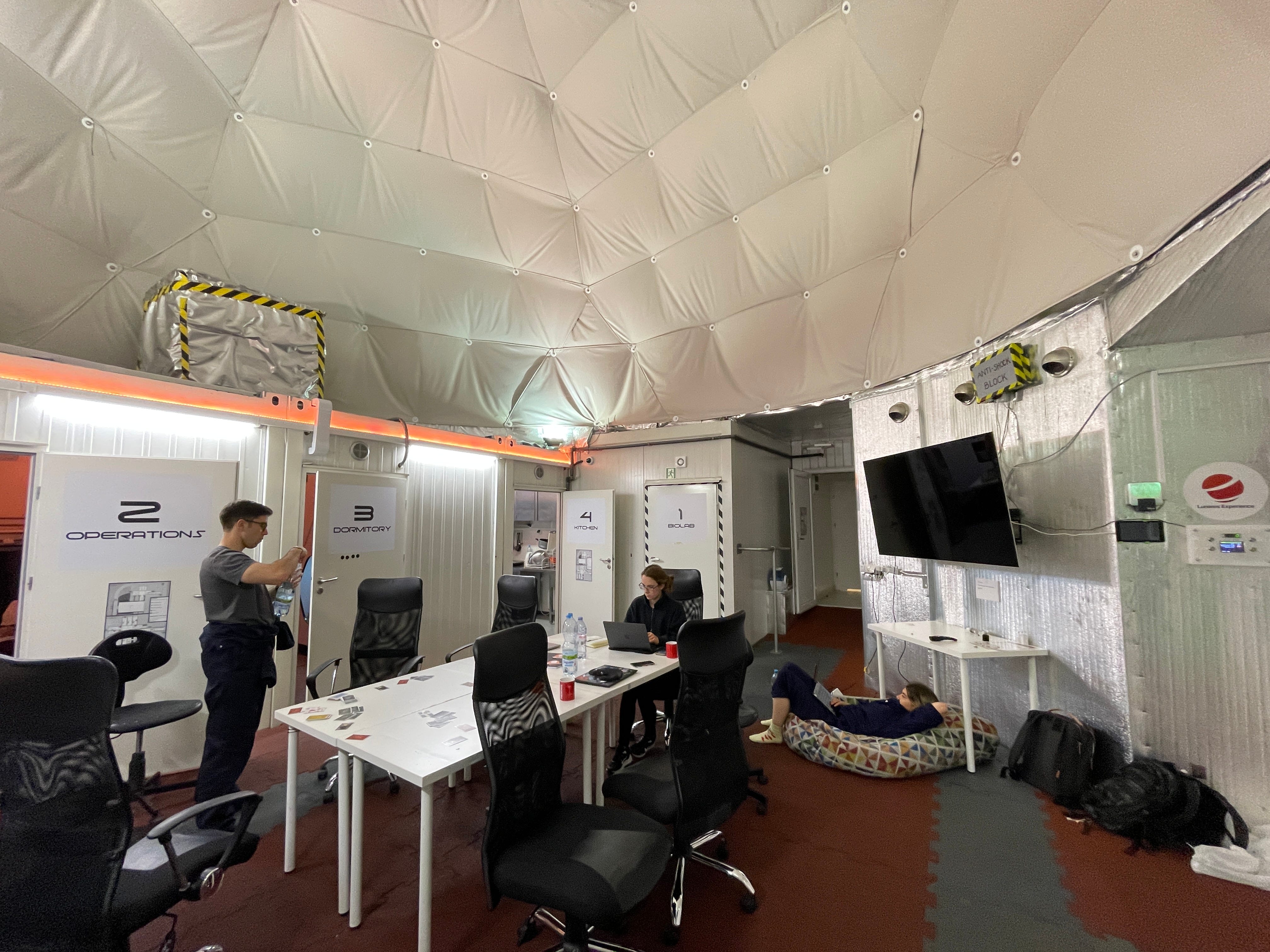
Instead, there is artificial lighting that can be scheduled to mimic an Earth day — a 24 hour cycle of sunrise and sunset — and can also be set on schedules for the Moon (29.53 Earth days, i.e. constantly light or dark) and Mars (24 hours, 40 minutes). LEDs surround a high ledge on two walls, which can create different colour effects (used when we were on EVA).
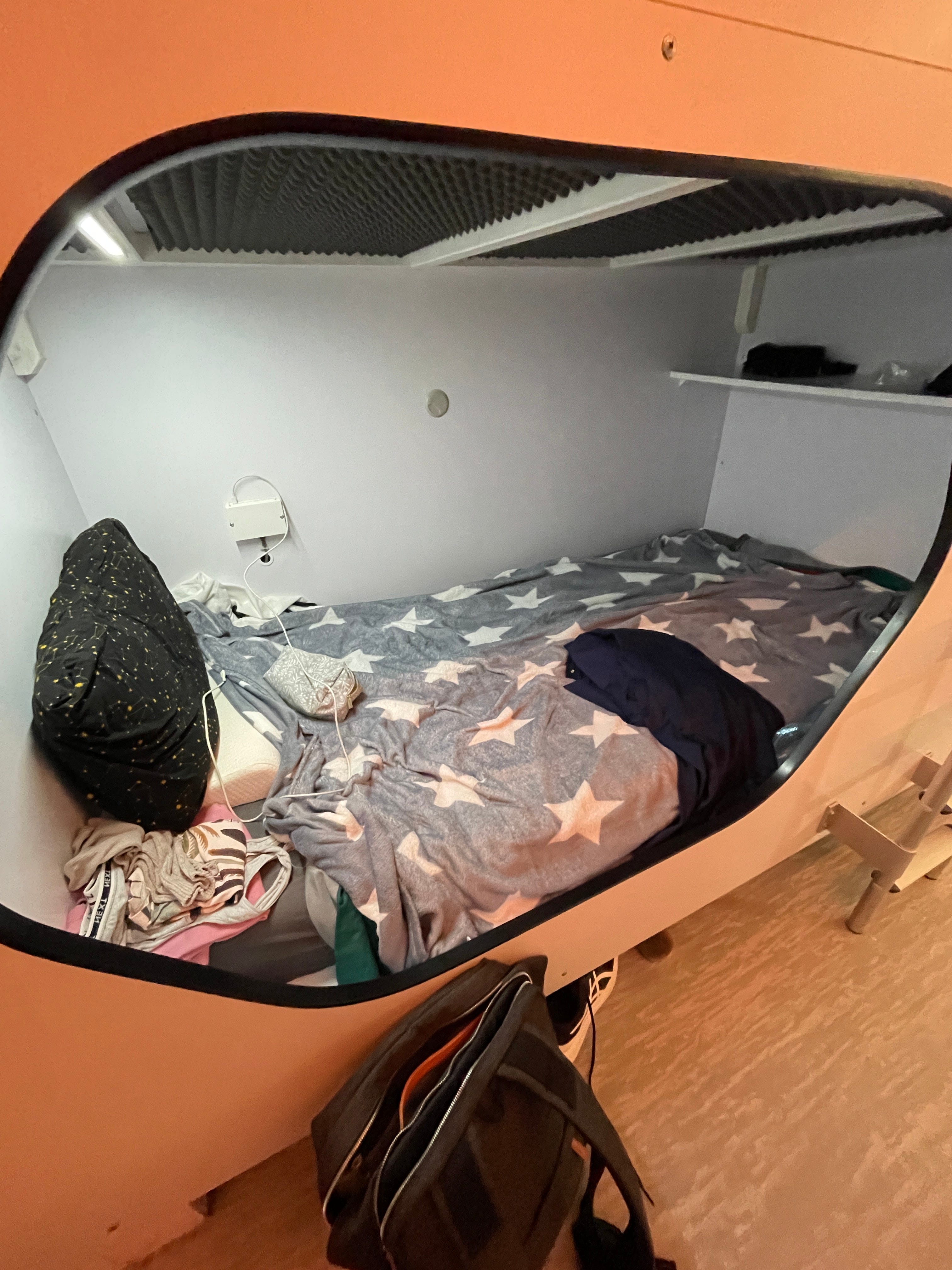
The dormitory contained six sleeping pods, which each had a mattress, sleeping bag, pillow and blanket. It was cosy but comfortable. The issue was that I’m a light sleeper, so during the night I often had to wear my Loops and a sleeping mask to block out the hab lights. Each pod had its own light, USB charging station, and shelf to put personal bits on.
Water
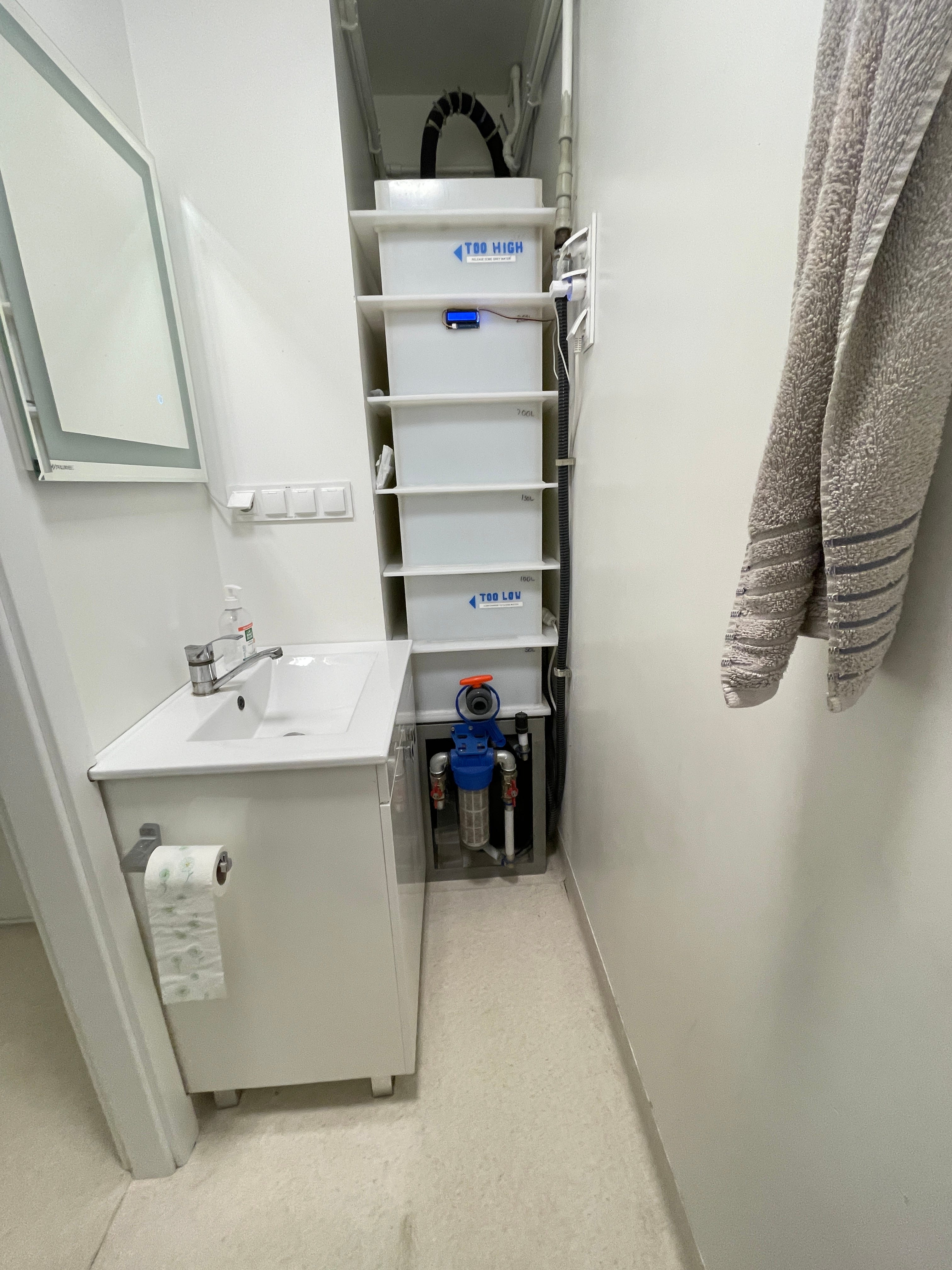
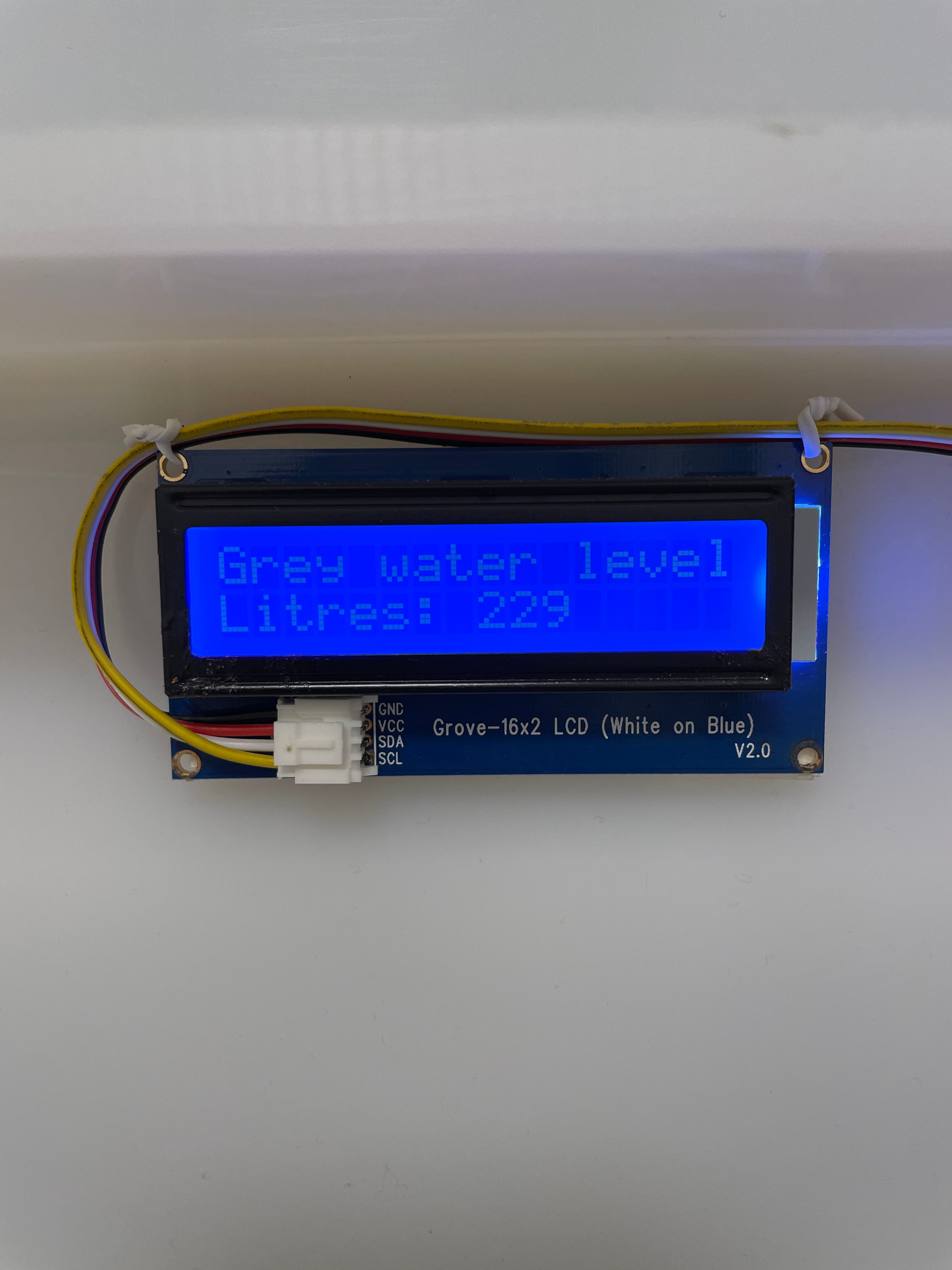
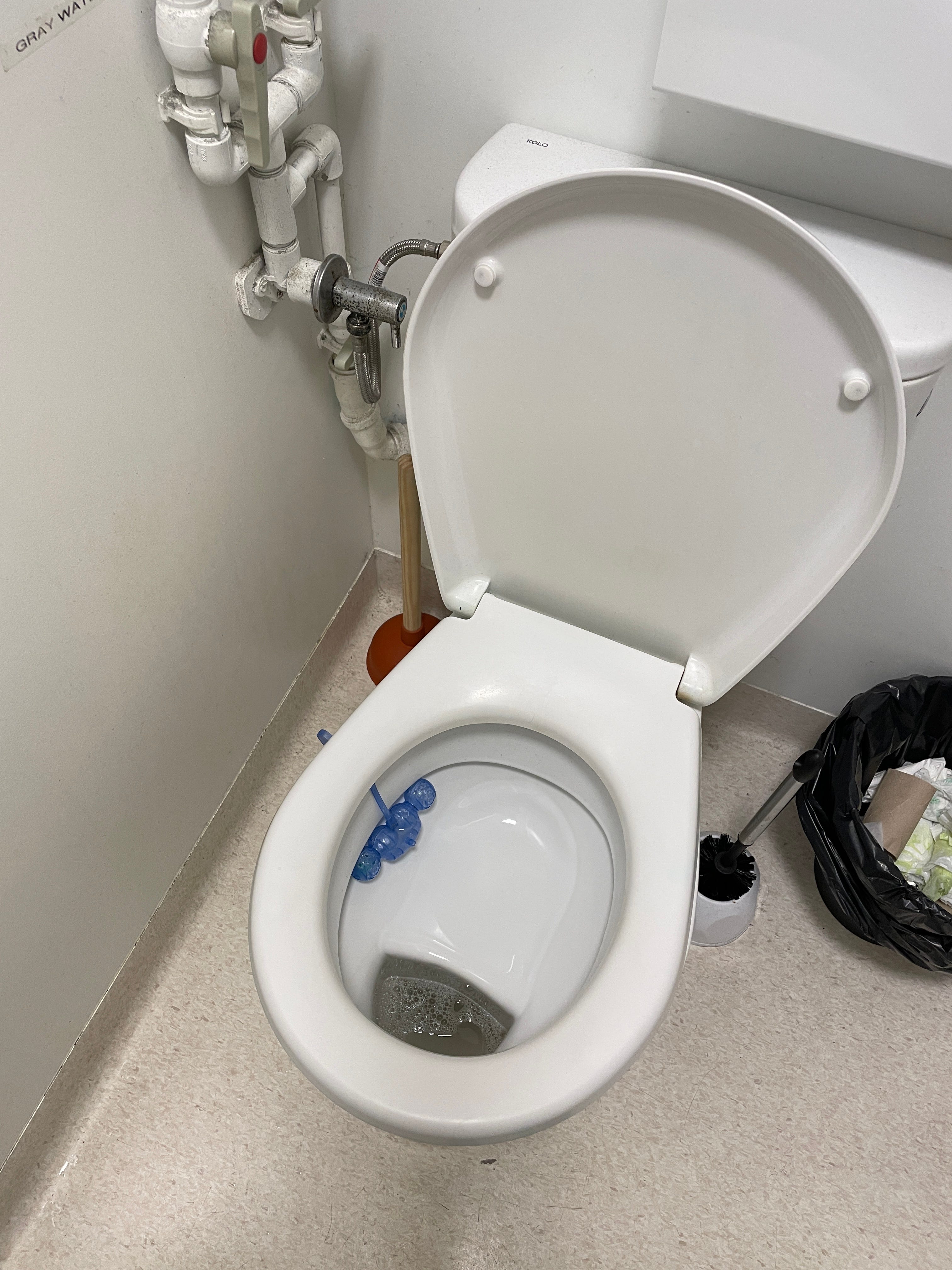
The habitat uses grey water recycling which services the shower, sinks, and toilet flushing. The waste water from the (single!) toilet is not recycled. Although the water is treated to drinking water standards, we were not able to drink it coming straight from the tap for insurance reasons. Instead, we used bottled water to drink directly, brush our teeth, and refill the kettle. We started the mission with a 2000 litre water tank of fresh water supplied by Ground Support (as the building is not attached to mains water) and carefully monitored grey water levels throughout the mission, switching between them as necessary.
Power
We only had electricity as a power source, there was no gas provided, which replicates what is available when living and working in space. At one point, we had a small electrical fire smouldering as the atrium LEDs burnt through and started smoking as we were preparing for an EVA!
Fire safety
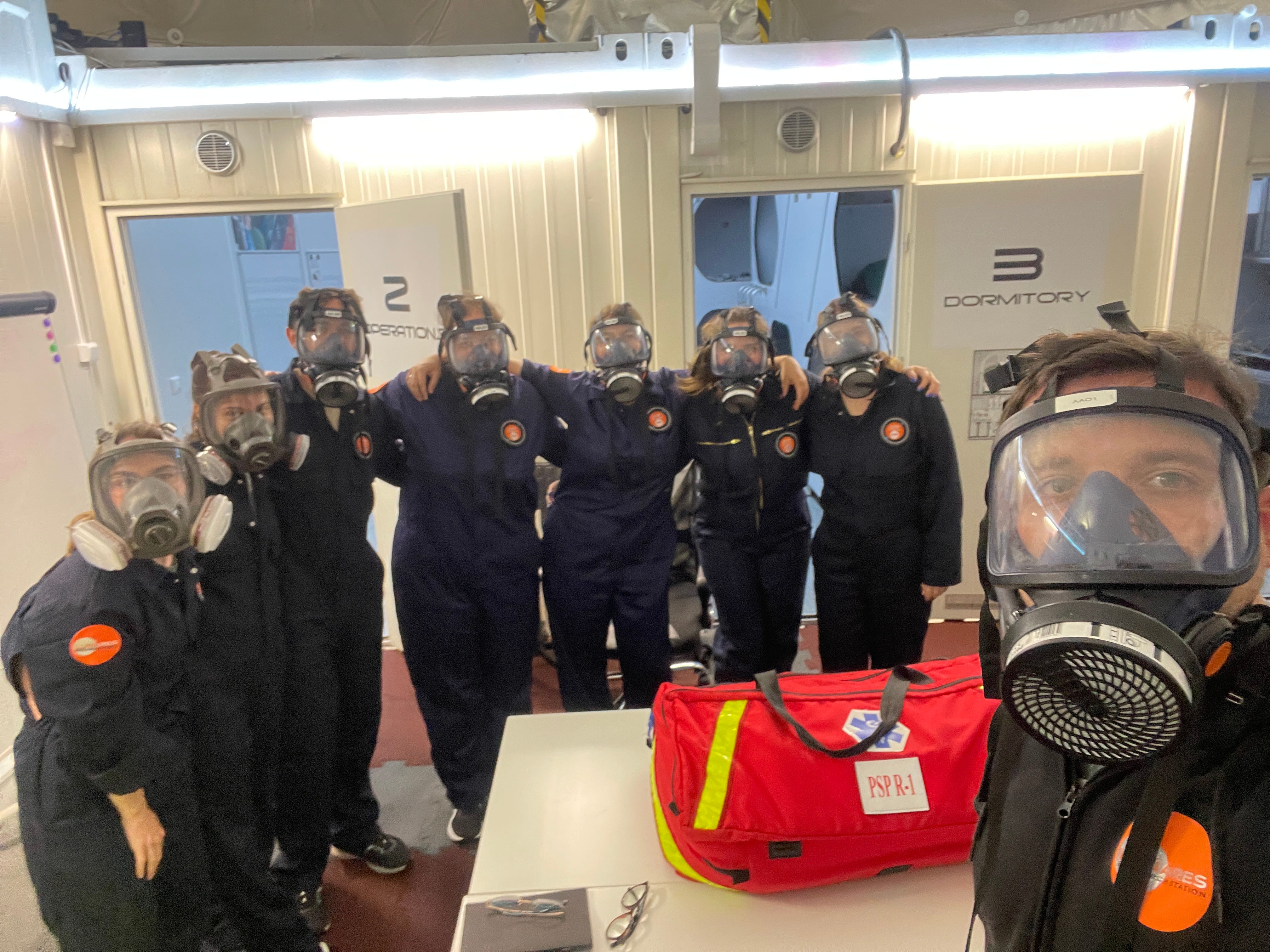
At every entry point in the habitat there was an electrical fire extinguisher, which was there to create a safe passage during evacuation and not to fight the actual fire. Also within the dormitories were gas masks to be put on in the case of evacuation so we could safely get outside.
Surveillance cameras
Every room apart from the sanitary module had a camera monitoring what the crew were doing. This was more for our safety and was not actively reviewed unless there was cause to. The footage is also not made available to researchers, even if they ask, to maintain crew privacy. In the dormitory, the camera greyed out the pod access hole so crew privacy whilst sleeping was preserved.
So why did I want to go on an analogue space mission?
My career goal is to become a space psychologist. This involves working with astronauts and space agencies through their selection, training, in-flight support, and post-flight reintegration back into society.
I've always been a massive space geek ever since I was a child. I have fond memories of sitting down with the huge Reader's Digest Atlas of the World and poring over the first 20 pages or so that talked about the Big Bang, the planets in our solar system, the stars and constellations, and how the Earth formed. And yes, this was back at a time when Pluto was still considered a planet! (remember: My Very Easy Method Just Speeds Up Naming Planets).
Side note: The original Reader's Digest Atlas of the World that my parents owned has long been lost to various house moves and clearances. But when I was up in Yorkshire visiting a National Trust property that had a second-hand bookshop, I found the exact book just waiting for me to pick it - a bargain for just £2, and a win for nostalgia.
I dreamed of exploring the galaxies, finding answers to the questions of "what is out there", "are we alone in space?", and “what does it all mean?” For me, space represents the pinnacle of human achievement and potentiality. It's about exploring, pushing yourself to and beyond your limits, doing things that were thought impossible - not just alone, but together with others.
Before going on the summer workshop, I knew very little about how the space industry operated and how to get a break into it. I had started to reach out to people on LinkedIn: the idea of going on an analogue space mission actually came from a real space psychologist I connected with, Laura Thomas, who herself is an analogue astronaut and currently somewhere on Devon Island in the Arctic Circle on her own mission with FMARS. My goal for the summer workshop was therefore to develop empathy with what astronauts experience and to identify potential areas of psychological research that I could run in future.
The psychology of space
Space may challenge our bodies, but it’s the mind that often determines whether a mission succeeds or fails. In the early days of human spaceflight, little attention was paid to its psychological demands. Astronauts were typically drawn from the armed forces, accustomed to the discipline, resilience, and clear command structures that space missions required.
Over time, space agencies began to recognise the unique psychological challenges of space travel: isolation, confinement, and the mental strain of operating in extreme environments. The study of these effects is more commonly known as human factors, which looks at how humans operate within systems, and are also systems themselves: leadership, group dynamics, communication, cultural differences, and conflict resolution.
I'm particularly interested in learning more about leadership and teamwork in such settings, both among astronauts and in their interactions with mission control, and even within mission control itself, having seen some of it firsthand now.
In a later article, I will cover off my own subjective experience of being on this mission. But suffice to say for now, I went into it with a lot of mental chatter —particularly from the inner critic — on what it felt I wasn't going to be able to do. “What if you panic inside the habitat with no windows?” “What if you need the toilet when you’re all suited up for the EVA?” I was aware of this happening, and realised that I needed to get control of this negative self-talk and change it into something positive in order for me to stick it out and succeed.
In the next article, I’ll take you inside the mission itself: the work, the routines, the challenges — and the unexpected moments of joy. Subscribe so you don’t miss out.